
Barns and rural buildings wanted
Agricultural and rural buildings with conversion or redevelopment potential. England and Wales.
Barns and rural buildings can sometimes become homes through conversion or, in some cases, replacement. In England, Class Q permitted development allows certain agricultural buildings to change to residential use; in Wales the route is through a planning application. We buy suitable buildings in both nations.
- Size
- Single barns to farmyards
- Planning
- With or without
- Areas
- England & Wales
- Ways we buy
- Outright or conditional
What barns and rural buildings do we want?
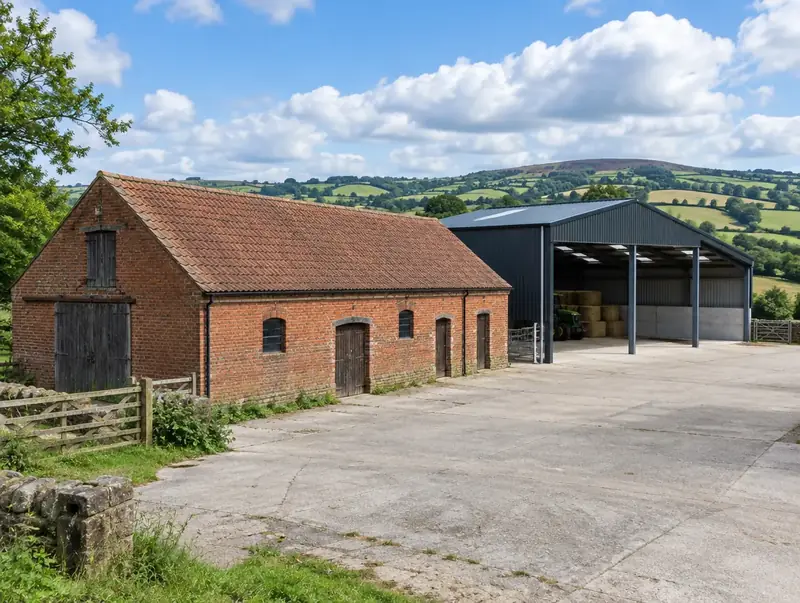
A redundant barn, stable block or yard can have residential potential. Traditional buildings often suit conversion, while modern steel barns may qualify for permitted development in England. We assess the building, access and planning route before proposing a deal.
- Traditional brick or stone barns
- Modern agricultural buildings that may suit Class Q (England)
- Stable blocks, workshops and rural yards
- Farmyards with several buildings
- Buildings with an existing access to a road
- Buildings with or without an existing consent
What decides whether a site works?
If you have farm buildings that are no longer needed, they may be suited to homes. We look at traditional and modern barns, stables and rural yards across England and Wales and explain the realistic planning route for each.
Planning route
In England, Class Q prior approval may apply to agricultural buildings; in Wales, a full application is usually needed.
Structure
Conversion routes usually require the building to be capable of conversion without substantial rebuilding.
Protected species
Bats and barn owls are common in rural buildings and need surveys at the right time of year.
Protected landscapes
National Parks and National Landscapes can restrict permitted development and design.
Access and services
Rural buildings often need new access, drainage and power.
Is it different in England and Wales?
England. The Planning and Infrastructure Act 2025 introduced Environmental Delivery Plans and a Nature Restoration Levy in England, which over time may offer an alternative to site-by-site mitigation for some environmental issues.
Wales. Flood risk in Wales is assessed under Technical Advice Note 15 and the Flood Map for Planning, which can be decisive for land near rivers and the coast.
What should I have ready?
None of this is essential to get started, but it helps us give a firmer view sooner:
- Photos of the buildings inside and out
- Approximate floor areas
- The buildings' current and past uses
- Access and any rights of way
How we buy
Ways to sell barns and rural buildings to us
Subject-to-planning contract
Common: we seek consent or prior approval and complete if successful.
Subject-to-planning contractWhere
Barns and rural buildings wanted by area
Choose your county to see what we look for locally and the towns we cover.
England
- Bedfordshire
- Berkshire
- Bristol
- Buckinghamshire
- Cambridgeshire
- Cheshire
- Cornwall
- County Durham
- Cumbria
- Derbyshire
- Devon
- Dorset
- The East Riding of Yorkshire
- East Sussex
- Essex
- Gloucestershire
- Greater London
- Greater Manchester
- Hampshire
- Herefordshire
- Hertfordshire
- The Isle of Wight
- Kent
- Lancashire
- Leicestershire
- Lincolnshire
- Merseyside
- Norfolk
- North Yorkshire
- Northamptonshire
- Northumberland
- Nottinghamshire
- Oxfordshire
- Rutland
- Shropshire
- Somerset
- South Yorkshire
- Staffordshire
- Suffolk
- Surrey
- Tyne and Wear
- Warwickshire
- The West Midlands
- West Sussex
- West Yorkshire
- Wiltshire
- Worcestershire
Wales
What happens next
Send the basics
A postcode or plan and a few lines about the land are enough to start.
We do the homework
We check planning history, policy, flood maps and access at no cost to you.
We explain the options
You get a written proposal covering price, structure and timing.
Agree and proceed
Once you are happy, solicitors are instructed and the deal moves forward.
Questions
Barns and rural buildings: common questions
Does Class Q apply in Wales?
No. Class Q is part of the permitted development rules for England. In Wales, barn conversions generally need a full planning application.
Can a steel-framed barn become a home?
In England it may, under Class Q, if it meets the conditions. Whether it is worth doing depends on the building, access and location.
We still use some of the buildings. Can we sell just part of the yard?
Yes. We can look at selling some buildings and keeping others, with access and boundaries agreed.
Do bats stop a barn conversion?
Not usually, but surveys and mitigation are needed, and survey seasons can affect timing.