
Barns and rural buildings wanted in Merseyside
Development Land Wanted buys barns and rural buildings in Merseyside and right across England and Wales. Owners and agents are both welcome.
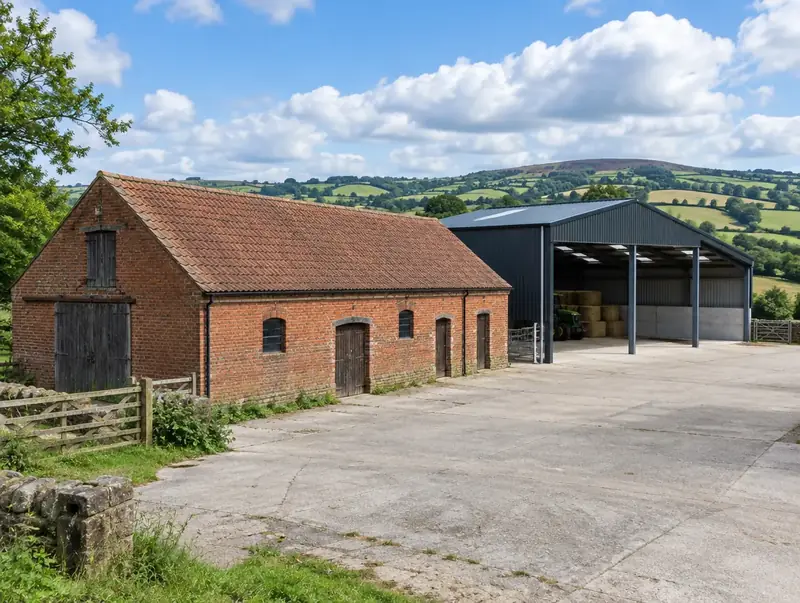
If you have farm buildings that are no longer needed, they may be suited to homes. We look at traditional and modern barns, stables and rural yards across England and Wales and explain the realistic planning route for each.
- Size
- Single barns to farmyards
- Planning
- With or without
- Areas
- England & Wales
- Ways we buy
- Outright or conditional
Is your land in Merseyside the kind we want?
Merseyside centres on Liverpool, with Birkenhead and Wallasey across the Mersey, Southport and Formby on the coast, and towns such as St Helens, Bootle, Huyton and Kirkby. Green Belt separates many of these places and covers much of the remaining open land, so most housing comes from previously developed land, docks, former industrial estates and town-centre sites. Grey belt and small fringe sites can also come forward.
- Modern agricultural buildings that may suit Class Q (England)
- Stable blocks, workshops and rural yards
- Buildings with an existing access to a road
- Buildings with or without an existing consent
Regeneration areas along the Liverpool and Birkenhead waterfronts, and around Merseyrail stations, are a focus for higher-density homes. The coast from Southport to the Wirral includes internationally protected dunes and estuary habitats, so coastal schemes often need habitats assessment and recreation mitigation.
What usually makes or breaks it
Planning route
In England, Class Q prior approval may apply to agricultural buildings; in Wales, a full application is usually needed.
Protected species
Bats and barn owls are common in rural buildings and need surveys at the right time of year.
Protected landscapes
National Parks and National Landscapes can restrict permitted development and design.
Since 6 August 2026, non-major development on sites of 0.2 hectares or less in England has generally been exempt from mandatory biodiversity net gain, unless priority habitat is affected. That makes many small sites simpler to bring forward.
The Planning and Infrastructure Act 2025 introduced Environmental Delivery Plans and a Nature Restoration Levy in England, which over time may offer an alternative to site-by-site mitigation for some environmental issues.
Parts of Merseyside are Green Belt, though not every town has any nearby. We check early whether a site is inside it and, if so, whether a grey belt or previously developed land case could apply.
Choosing how to sell
Subject-to-planning contract
Common: we seek consent or prior approval and complete if successful.
Subject-to-planning contractHow a sale to us works
Send the basics
A postcode or plan and a few lines about the land are enough to start.
We do the homework
We check planning history, policy, flood maps and access at no cost to you.
We explain the options
You get a written proposal covering price, structure and timing.
Agree and proceed
Once you are happy, solicitors are instructed and the deal moves forward.
Frequently asked in Merseyside
Does Class Q apply in Wales?
No. Class Q is part of the permitted development rules for England. In Wales, barn conversions generally need a full planning application.
Do bats stop a barn conversion?
Not usually, but surveys and mitigation are needed, and survey seasons can affect timing.
How quickly can you look at a site in Merseyside?
For most sites we can give an initial view once we have the location and a plan. Detailed checks follow if the land looks suitable.
Which planning rules apply to land in Merseyside?
As Merseyside is in England, national policy comes from the National Planning Policy Framework, revised in August 2026. Local policies in the council's development plan also apply.