
Barns and rural buildings wanted in Lincolnshire
Development Land Wanted buys barns and rural buildings in Lincolnshire and right across England and Wales. Owners and agents are both welcome.
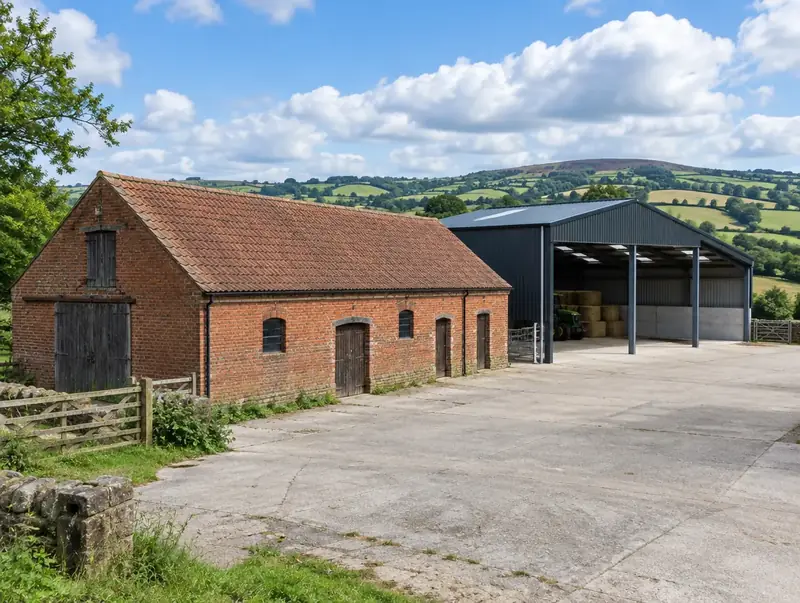
Barns and rural buildings can sometimes become homes through conversion or, in some cases, replacement. In England, Class Q permitted development allows certain agricultural buildings to change to residential use; in Wales the route is through a planning application. We buy suitable buildings in both nations.
- Size
- Single barns to farmyards
- Planning
- With or without
- Areas
- England & Wales
- Ways we buy
- Outright or conditional
The barns and rural buildings that interests us around Lincolnshire
Lincolnshire, as used here, includes the Humber towns of Grimsby, Scunthorpe and Cleethorpes as well as Lincoln, Boston, Grantham, Spalding, Stamford and Skegness. There is no Green Belt, but the Lincolnshire Wolds National Landscape covers part of the county and much of the south and east lies in low-lying fenland and coastal marsh at high flood risk. Typical sites include edge-of-town fields, farm buildings, village infill and former industrial land.
- Traditional brick or stone barns
- Modern agricultural buildings that may suit Class Q (England)
- Farmyards with several buildings
- Buildings with an existing access to a road
Flood zones and the sequential test often decide what is possible in the Fens and along the coast, so sites on higher ground or within existing towns are favoured. The A1 corridor at Grantham and Stamford, the Lincoln area and the Humber ports see the most interest in larger housing land.
What decides whether a site in Lincolnshire works
Protected species
Bats and barn owls are common in rural buildings and need surveys at the right time of year.
Protected landscapes
National Parks and National Landscapes can restrict permitted development and design.
Access and services
Rural buildings often need new access, drainage and power.
The August 2026 NPPF supports homes within reasonable walking distance (around 800 metres) of well-connected railway stations, with minimum densities of 35 homes per hectare, or 45 near higher-frequency stations.
Since 6 August 2026, non-major development on sites of 0.2 hectares or less in England has generally been exempt from mandatory biodiversity net gain, unless priority habitat is affected. That makes many small sites simpler to bring forward.
Parts of Lincolnshire fall within Lincolnshire Wolds National Landscape. Protected landscapes carry strong policy protection, so land in or next to them needs particularly careful assessment.
Barns and rural buildings wanted in towns across Lincolnshire
Ways to sell barns and rural buildings in Lincolnshire
Subject-to-planning contract
Common: we seek consent or prior approval and complete if successful.
Subject-to-planning contractOption agreement
You grant us the right to buy within a set period, usually for an option premium, while we pursue planning.
Option agreementThe next steps
Tell us about the land
Use the form or call us with the location and a rough outline of the site.
Free appraisal
We review title, planning and constraints and tell you honestly what we think.
Written offer
If the site suits us, we set out an offer and the way we propose to buy.
Solicitors take over
Your solicitor and ours agree the contract; we keep you informed throughout.
Frequently asked in Lincolnshire
We still use some of the buildings. Can we sell just part of the yard?
Yes. We can look at selling some buildings and keeping others, with access and boundaries agreed.
Do bats stop a barn conversion?
Not usually, but surveys and mitigation are needed, and survey seasons can affect timing.
How quickly can you look at a site in Lincolnshire?
For most sites we can give an initial view once we have the location and a plan. Detailed checks follow if the land looks suitable.
Do I need to pay anything to have land in Lincolnshire assessed?
No. Our appraisal is free and there is no obligation to sell to us.