
Barns and rural buildings wanted in Leicestershire
We want to hear from owners of barns and rural buildings in Leicestershire. There is nothing to pay us, and you are under no obligation.
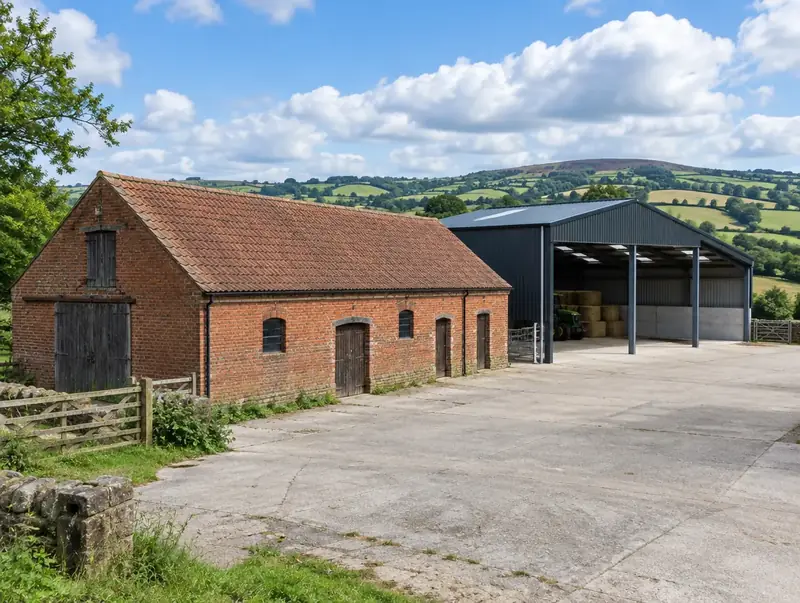
If you have farm buildings that are no longer needed, they may be suited to homes. We look at traditional and modern barns, stables and rural yards across England and Wales and explain the realistic planning route for each.
- Size
- Single barns to farmyards
- Planning
- With or without
- Areas
- England & Wales
- Ways we buy
- Outright or conditional
Barns and rural buildings we are looking for in Leicestershire
Leicestershire surrounds the city of Leicester and includes Loughborough, Hinckley, Coalville, Melton Mowbray and Market Harborough, plus many villages. There is no Green Belt, although local plans use green wedges and areas of separation to keep settlements apart. Typical sites include edge-of-town and village fields, farm buildings, infill plots and former industrial land around Coalville and the north-west of the county.
- Modern agricultural buildings that may suit Class Q (England)
- Stable blocks, workshops and rural yards
- Buildings with an existing access to a road
- Buildings with or without an existing consent
The M1, M69 and Midland Main Line corridors carry most growth, with urban extensions around Leicester and Loughborough. In the north-west, nutrient advice for the River Mease has affected schemes, and much of the area near Coalville is former coalfield, so mining risk checks can apply.
What usually makes or breaks it
Planning route
In England, Class Q prior approval may apply to agricultural buildings; in Wales, a full application is usually needed.
Protected species
Bats and barn owls are common in rural buildings and need surveys at the right time of year.
Access and services
Rural buildings often need new access, drainage and power.
In England, the revised National Planning Policy Framework published on 17 August 2026 replaced the old "tilted balance" with new settlement policies: development within a settlement should normally be approved unless the harm substantially outweighs the benefits, while land outside a settlement can gain support in defined circumstances.
The Planning and Infrastructure Act 2025 introduced Environmental Delivery Plans and a Nature Restoration Levy in England, which over time may offer an alternative to site-by-site mitigation for some environmental issues.
Leicestershire has no designated Green Belt, so the main policy questions near Leicestershire are usually the settlement boundary, landscape and access.
Barns and rural buildings wanted in towns across Leicestershire
Four ways to sell to us
Subject-to-planning contract
Common: we seek consent or prior approval and complete if successful.
Subject-to-planning contractOption agreement
You grant us the right to buy within a set period, usually for an option premium, while we pursue planning.
Option agreementWhat happens after you get in touch
Tell us about the land
Use the form or call us with the location and a rough outline of the site.
Free appraisal
We review title, planning and constraints and tell you honestly what we think.
Written offer
If the site suits us, we set out an offer and the way we propose to buy.
Solicitors take over
Your solicitor and ours agree the contract; we keep you informed throughout.
Barns and rural buildings in Leicestershire: common questions
Does Class Q apply in Wales?
No. Class Q is part of the permitted development rules for England. In Wales, barn conversions generally need a full planning application.
Do bats stop a barn conversion?
Not usually, but surveys and mitigation are needed, and survey seasons can affect timing.
Which planning rules apply to land in Leicestershire?
As Leicestershire is in England, national policy comes from the National Planning Policy Framework, revised in August 2026. Local policies in the council's development plan also apply.
Do I need to pay anything to have land in Leicestershire assessed?
No. Our appraisal is free and there is no obligation to sell to us.