
Barns and rural buildings wanted in Surrey
We are actively looking for barns and rural buildings in Surrey and the surrounding area, with or without planning permission.
If you have farm buildings that are no longer needed, they may be suited to homes. We look at traditional and modern barns, stables and rural yards across England and Wales and explain the realistic planning route for each.
- Size
- Single barns to farmyards
- Planning
- With or without
- Areas
- England & Wales
- Ways we buy
- Outright or conditional
What barns and rural buildings we want near Surrey
Surrey is a county of commuter towns, including Woking, Guildford, Epsom, Reigate, Redhill, Camberley, Staines-upon-Thames and Farnham, and many villages. Most of the county is Metropolitan Green Belt, and the Surrey Hills and High Weald National Landscapes cover much of the south. Previously developed land, infill plots, garden and backland sites and grey belt are therefore central to housing supply, with larger sites usually allocated through local plans.
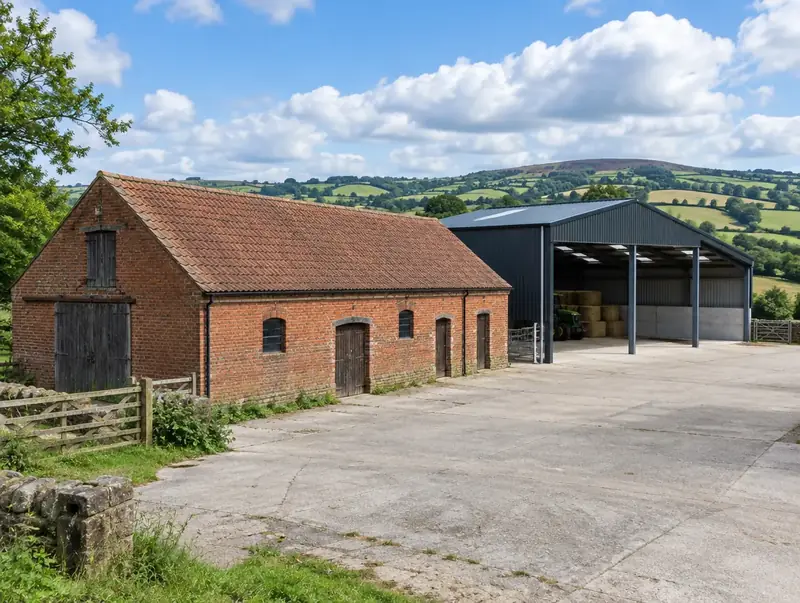
- Traditional brick or stone barns
- Modern agricultural buildings that may suit Class Q (England)
- Farmyards with several buildings
- Buildings with an existing access to a road
Heathland protection in the west of the county means many schemes contribute to mitigation for the Thames Basin Heaths, and flood risk from the Thames and Mole affects riverside towns. Stations on the lines into Waterloo and Victoria matter, as English planning policy now gives weight to locations near well-connected stations.
What usually makes or breaks it
Planning route
In England, Class Q prior approval may apply to agricultural buildings; in Wales, a full application is usually needed.
Protected species
Bats and barn owls are common in rural buildings and need surveys at the right time of year.
Protected landscapes
National Parks and National Landscapes can restrict permitted development and design.
Where an English council cannot show a five-year supply of housing land, or its Housing Delivery Test result falls below 75%, the August 2026 NPPF can give policy support to suitable housing outside settlement boundaries.
In England, a planning permission normally has to be implemented within three years unless the council sets a different period, and councils aim to decide minor applications within eight weeks and major ones within thirteen.
Some land in Surrey is designated Green Belt. If your land is within it, it may still qualify as grey belt or previously developed land under national policy, subject to the Golden Rules.
Parts of Surrey fall within Surrey Hills National Landscape and High Weald National Landscape. Protected landscapes carry strong policy protection, so land in or next to them needs particularly careful assessment.
Ways to sell barns and rural buildings in Surrey
Subject-to-planning contract
We agree a price now and complete once a satisfactory planning permission is granted.
Subject-to-planning contractOption agreement
You grant us the right to buy within a set period, usually for an option premium, while we pursue planning.
Option agreementThe next steps
Send the basics
A postcode or plan and a few lines about the land are enough to start.
We do the homework
We check planning history, policy, flood maps and access at no cost to you.
We explain the options
You get a written proposal covering price, structure and timing.
Agree and proceed
Once you are happy, solicitors are instructed and the deal moves forward.
Barns and rural buildings in Surrey: common questions
Can a steel-framed barn become a home?
In England it may, under Class Q, if it meets the conditions. Whether it is worth doing depends on the building, access and location.
Do bats stop a barn conversion?
Not usually, but surveys and mitigation are needed, and survey seasons can affect timing.
How quickly can you look at a site in Surrey?
For most sites we can give an initial view once we have the location and a plan. Detailed checks follow if the land looks suitable.
Which planning rules apply to land in Surrey?
As Surrey is in England, national policy comes from the National Planning Policy Framework, revised in August 2026. Local policies in the council's development plan also apply.