
Infill plots wanted
Gaps between existing buildings on established streets. England and Wales.
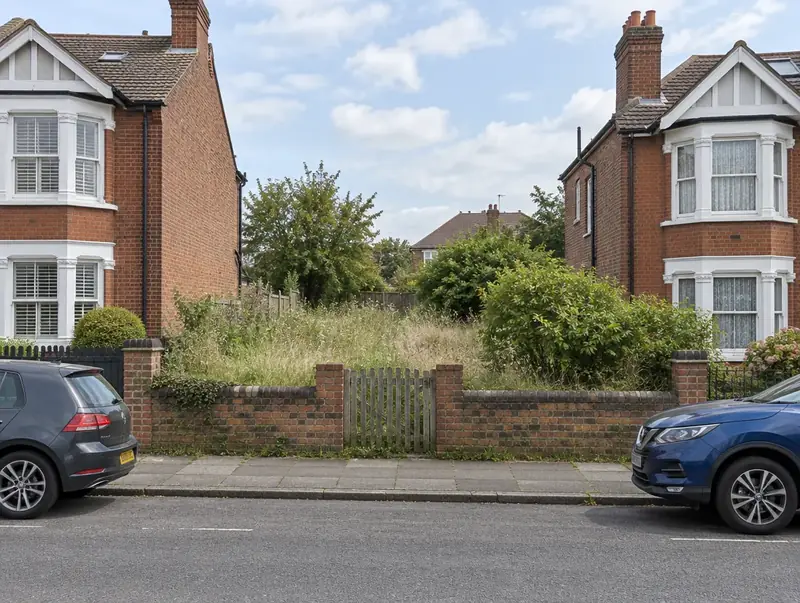
An infill plot is a gap in an otherwise built-up frontage, between existing houses or buildings, where one or more new homes could fit. These small sites are often in sought-after streets and can be well suited to planning.
- Size
- 1 to 9 homes typically
- Planning
- With or without
- Areas
- England & Wales
- Ways we buy
- Outright or conditional
What infill plots do we want?
Infill plots fill a gap in an existing street. They are usually small, but because they sit within built-up areas the planning case can be good. We buy infill land across England and Wales, with or without consent.
- Gaps in a street frontage between houses or other buildings
- Side gardens with their own road frontage
- Corner plots within built-up areas
- Small yards or garages between houses
- Plots large enough for one or more homes with parking
- Land with or without an earlier planning history
What decides whether a site works?
If you own a gap between buildings on a road, it may be an infill plot. We look at how new homes would sit alongside the neighbours, how they would be reached, and whether trees or drainage affect the space.
Character of the street
New homes need to suit the building line, height and spacing of the street.
Neighbours' amenity
Overlooking, loss of light and outlook are the issues planners weigh most often.
Parking and access
A safe access and enough parking can decide small schemes.
Trees
Protected trees or trees in a conservation area can limit what fits.
Services
Connections for drainage, water and power need to be reachable.
Is it different in England and Wales?
England. National policy in England now recognises "medium development" of 10 to 49 homes on sites up to 2.5 hectares, and asks councils to allocate at least 10% of their housing on sites of one hectare or less and a further 10% on sites of one to 2.5 hectares.
Wales. Flood risk in Wales is assessed under Technical Advice Note 15 and the Flood Map for Planning, which can be decisive for land near rivers and the coast.
What should I have ready?
None of this is essential to get started, but it helps us give a firmer view sooner:
- Plot dimensions or a plan
- Photos of the frontage and the neighbouring buildings
- Any planning history on the plot
- Ownership of the boundary walls and fences
How we buy
Ways to sell infill plots to us
Subject-to-planning contract
Common for infill: we apply, and you sell once permission is granted.
Subject-to-planning contractWhere
Infill plots wanted by area
Choose your county to see what we look for locally and the towns we cover.
England
- Bedfordshire
- Berkshire
- Bristol
- Buckinghamshire
- Cambridgeshire
- Cheshire
- Cornwall
- County Durham
- Cumbria
- Derbyshire
- Devon
- Dorset
- The East Riding of Yorkshire
- East Sussex
- Essex
- Gloucestershire
- Greater London
- Greater Manchester
- Hampshire
- Herefordshire
- Hertfordshire
- The Isle of Wight
- Kent
- Lancashire
- Leicestershire
- Lincolnshire
- Merseyside
- Norfolk
- North Yorkshire
- Northamptonshire
- Northumberland
- Nottinghamshire
- Oxfordshire
- Rutland
- Shropshire
- Somerset
- South Yorkshire
- Staffordshire
- Suffolk
- Surrey
- Tyne and Wear
- Warwickshire
- The West Midlands
- West Sussex
- West Yorkshire
- Wiltshire
- Worcestershire
Wales
What happens next
Send the basics
A postcode or plan and a few lines about the land are enough to start.
We do the homework
We check planning history, policy, flood maps and access at no cost to you.
We explain the options
You get a written proposal covering price, structure and timing.
Agree and proceed
Once you are happy, solicitors are instructed and the deal moves forward.
Questions
Infill plots: common questions
How wide does an infill plot need to be?
There is no fixed figure; it depends on the street. A plot that allows a home similar in width to its neighbours, with space to the sides, is a good start.
Will my neighbours be consulted?
Yes. The council consults neighbours on planning applications, and their comments are considered alongside policy.
Can I sell a plot next to my own house?
Often, yes. We make sure access, boundaries and services are set out so your own home is protected.
Do small infill sites need biodiversity net gain?
In England, from 6 August 2026 most non-major sites of 0.2 hectares or less are exempt from mandatory BNG, unless priority habitat is affected. Wales uses a different approach.