
Redundant buildings wanted
Empty offices, shops, pubs and other buildings suited to conversion or redevelopment. England and Wales.
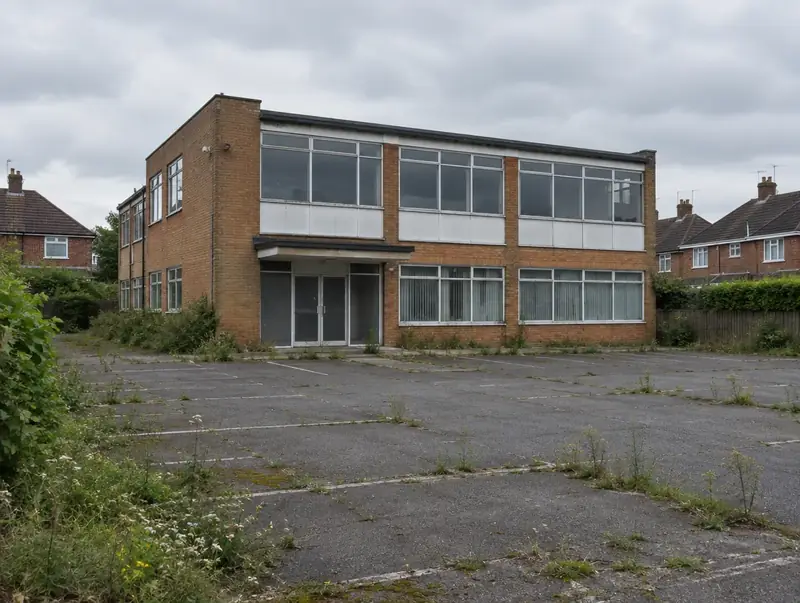
Redundant buildings are empty or underused buildings, such as offices, shops, pubs, chapels or halls, that could be converted or replaced with homes. We assess both conversion and redevelopment and buy suitable buildings across England and Wales.
- Size
- Any
- Planning
- With or without
- Areas
- England & Wales
- Ways we buy
- Outright or conditional
What redundant buildings do we want?
A redundant building is one whose original use has ended. Many make good homes through conversion, while others are better redeveloped. We look at the building, its planning position and any community or heritage interest before making an offer.
- Vacant offices and commercial buildings
- Shops with upper floors or whole retail buildings
- Former pubs, halls, chapels and churches
- Buildings with or without existing consent
- Buildings within towns and villages
- Sites where demolition and rebuilding may be better than conversion
What decides whether a site works?
If you own a building that no longer works for its original purpose, it may suit residential conversion or redevelopment. We consider offices, retail, pubs, community and religious buildings, and more.
Community value
Pubs and community buildings may be listed as assets of community value or protected by policy.
Heritage
Listed buildings and conservation areas need careful design and extra consents.
Prior approval (England)
Some changes of use can be made through permitted development with prior approval.
Building condition
Structure, layout and light decide whether conversion makes sense.
Parking and amenity
Homes need outdoor space, bins and parking where the council expects it.
Is it different in England and Wales?
England. The Planning and Infrastructure Act 2025 introduced Environmental Delivery Plans and a Nature Restoration Levy in England, which over time may offer an alternative to site-by-site mitigation for some environmental issues.
Wales. Welsh planning policy seeks a net benefit for biodiversity rather than using England's statutory biodiversity net gain metric, so ecology is assessed differently on Welsh sites.
What should I have ready?
None of this is essential to get started, but it helps us give a firmer view sooner:
- Floor plans or floor areas
- The building's last use and when it ended
- Any listing or conservation area status
- Surveys or condition reports if available
How we buy
Ways to sell redundant buildings to us
Outright purchase
Common for empty buildings, with conversion costs reflected in the price.
Outright purchaseSubject-to-planning contract
Used where consent or prior approval is still needed.
Subject-to-planning contractWhere
Redundant buildings wanted by area
Choose your county to see what we look for locally and the towns we cover.
England
- Bedfordshire
- Berkshire
- Bristol
- Buckinghamshire
- Cambridgeshire
- Cheshire
- Cornwall
- County Durham
- Cumbria
- Derbyshire
- Devon
- Dorset
- The East Riding of Yorkshire
- East Sussex
- Essex
- Gloucestershire
- Greater London
- Greater Manchester
- Hampshire
- Herefordshire
- Hertfordshire
- The Isle of Wight
- Kent
- Lancashire
- Leicestershire
- Lincolnshire
- Merseyside
- Norfolk
- North Yorkshire
- Northamptonshire
- Northumberland
- Nottinghamshire
- Oxfordshire
- Rutland
- Shropshire
- Somerset
- South Yorkshire
- Staffordshire
- Suffolk
- Surrey
- Tyne and Wear
- Warwickshire
- The West Midlands
- West Sussex
- West Yorkshire
- Wiltshire
- Worcestershire
Wales
What happens next
Send the basics
A postcode or plan and a few lines about the land are enough to start.
We do the homework
We check planning history, policy, flood maps and access at no cost to you.
We explain the options
You get a written proposal covering price, structure and timing.
Agree and proceed
Once you are happy, solicitors are instructed and the deal moves forward.
Questions
Redundant buildings: common questions
Can a former pub be converted to homes?
Sometimes. Pubs are often protected by local policy, and the August 2026 NPPF aims to avoid loss of valued community facilities, so evidence about viability and need matters.
My building is listed. Is that a problem?
Not necessarily, but it means listed building consent as well as planning permission, and design must respect the building's significance.
Should I strip out the building before selling?
No. Leave it as it is and tell us about its condition; we will assess it as found.
Do you buy buildings that need demolition?
Yes, where redevelopment is the better option and the planning position supports it.