
Barns and rural buildings wanted in the West Midlands
Development Land Wanted buys barns and rural buildings in the West Midlands and right across England and Wales. Owners and agents are both welcome.
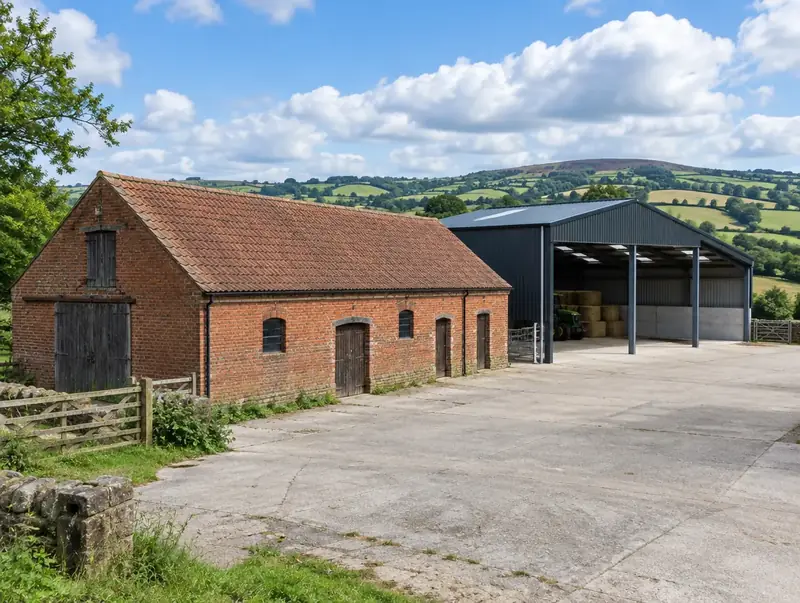
A redundant barn, stable block or yard can have residential potential. Traditional buildings often suit conversion, while modern steel barns may qualify for permitted development in England. We assess the building, access and planning route before proposing a deal.
- Size
- Single barns to farmyards
- Planning
- With or without
- Areas
- England & Wales
- Ways we buy
- Outright or conditional
Barns and rural buildings we are looking for in the West Midlands
The West Midlands county is a dense conurbation of Birmingham, Wolverhampton, Coventry, Solihull, Walsall, Dudley and the Black Country towns. Green Belt surrounds and separates parts of the conurbation, including the Meriden Gap between Birmingham and Coventry, so most housing comes from previously developed land: former industrial and canal-side sites, yards, garage courts and town centres. Grey belt and small fringe sites around Sutton Coldfield, Solihull and Aldridge can also come forward.
- Modern agricultural buildings that may suit Class Q (England)
- Stable blocks, workshops and rural yards
- Buildings with an existing access to a road
- Buildings with or without an existing consent
Metro tram extensions, the High Speed 2 stations at Curzon Street and Interchange, and suburban rail lines are a focus for higher-density homes. Former industrial land often needs contamination and ground investigation, and the Black Country's mining and limestone legacy means ground stability checks are common.
Before we make an offer in the West Midlands
Planning route
In England, Class Q prior approval may apply to agricultural buildings; in Wales, a full application is usually needed.
Structure
Conversion routes usually require the building to be capable of conversion without substantial rebuilding.
Access and services
Rural buildings often need new access, drainage and power.
In England, the revised National Planning Policy Framework published on 17 August 2026 replaced the old "tilted balance" with new settlement policies: development within a settlement should normally be approved unless the harm substantially outweighs the benefits, while land outside a settlement can gain support in defined circumstances.
The August 2026 NPPF supports homes within reasonable walking distance (around 800 metres) of well-connected railway stations, with minimum densities of 35 homes per hectare, or 45 near higher-frequency stations.
Barns and rural buildings wanted in towns across the West Midlands
How we could buy your land in the West Midlands
Subject-to-planning contract
Common: we seek consent or prior approval and complete if successful.
Subject-to-planning contractWhat happens after you get in touch
Send the basics
A postcode or plan and a few lines about the land are enough to start.
We do the homework
We check planning history, policy, flood maps and access at no cost to you.
We explain the options
You get a written proposal covering price, structure and timing.
Agree and proceed
Once you are happy, solicitors are instructed and the deal moves forward.
Questions owners in the West Midlands ask
Does Class Q apply in Wales?
No. Class Q is part of the permitted development rules for England. In Wales, barn conversions generally need a full planning application.
Do bats stop a barn conversion?
Not usually, but surveys and mitigation are needed, and survey seasons can affect timing.
Which planning rules apply to land in the West Midlands?
As the West Midlands is in England, national policy comes from the National Planning Policy Framework, revised in August 2026. Local policies in the council's development plan also apply.
Do I need to pay anything to have land in the West Midlands assessed?
No. Our appraisal is free and there is no obligation to sell to us.