
Barns and rural buildings wanted in Rutland
We want to hear from owners of barns and rural buildings in Rutland. There is nothing to pay us, and you are under no obligation.
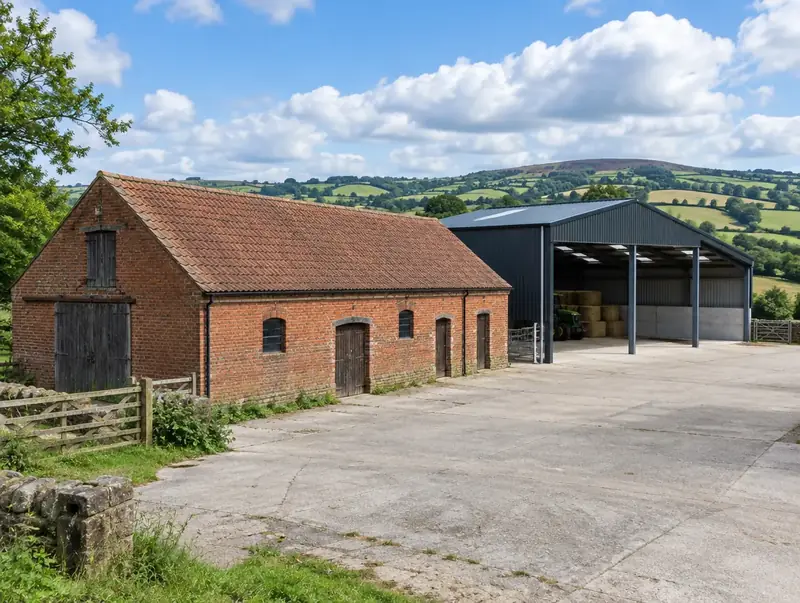
A redundant barn, stable block or yard can have residential potential. Traditional buildings often suit conversion, while modern steel barns may qualify for permitted development in England. We assess the building, access and planning route before proposing a deal.
- Size
- Single barns to farmyards
- Planning
- With or without
- Areas
- England & Wales
- Ways we buy
- Outright or conditional
Barns and rural buildings we are looking for in Rutland
Rutland is a small rural county centred on the market towns of Oakham and Uppingham, with many villages around Rutland Water. There is no Green Belt and no National Landscape, but conservation areas, listed buildings and the protected habitats of Rutland Water are frequent considerations. Housing land typically comes forward as small edge-of-village fields, infill plots, farm buildings and occasional former military or commercial land.
- Modern agricultural buildings that may suit Class Q (England)
- Stable blocks, workshops and rural yards
- Buildings with an existing access to a road
- Buildings with or without an existing consent
Most new homes are planned in Oakham and Uppingham, with limited growth in the larger villages. Rutland Water is internationally protected for birds, and the rural road network and the rail line through Oakham shape which locations are seen as sustainable.
What usually makes or breaks it
Planning route
In England, Class Q prior approval may apply to agricultural buildings; in Wales, a full application is usually needed.
Structure
Conversion routes usually require the building to be capable of conversion without substantial rebuilding.
Access and services
Rural buildings often need new access, drainage and power.
In England, the revised National Planning Policy Framework published on 17 August 2026 replaced the old "tilted balance" with new settlement policies: development within a settlement should normally be approved unless the harm substantially outweighs the benefits, while land outside a settlement can gain support in defined circumstances.
National policy in England now recognises "medium development" of 10 to 49 homes on sites up to 2.5 hectares, and asks councils to allocate at least 10% of their housing on sites of one hectare or less and a further 10% on sites of one to 2.5 hectares.
Choosing how to sell
Subject-to-planning contract
We agree a price now and complete once a satisfactory planning permission is granted.
Subject-to-planning contractWhat happens after you get in touch
Get in touch
Tell us where the land is and what you know about it.
Site review
We look at the land, its planning position and anything that could affect it.
Proposal
We put our proposal in writing, with no obligation to accept.
Exchange and completion
If you go ahead, contracts are exchanged and the sale completes on the agreed terms.
Questions owners in Rutland ask
We still use some of the buildings. Can we sell just part of the yard?
Yes. We can look at selling some buildings and keeping others, with access and boundaries agreed.
Do bats stop a barn conversion?
Not usually, but surveys and mitigation are needed, and survey seasons can affect timing.
Do you buy barns and rural buildings in Rutland?
Yes. We buy barns and rural buildings in Rutland and throughout Rutland, as well as elsewhere in England and Wales. Tell us where the land is and we will give you a free appraisal.
Do I need to pay anything to have land in Rutland assessed?
No. Our appraisal is free and there is no obligation to sell to us.