
Garage courts and yards wanted
Lock-up garage blocks, parking courts and small service yards. England and Wales.
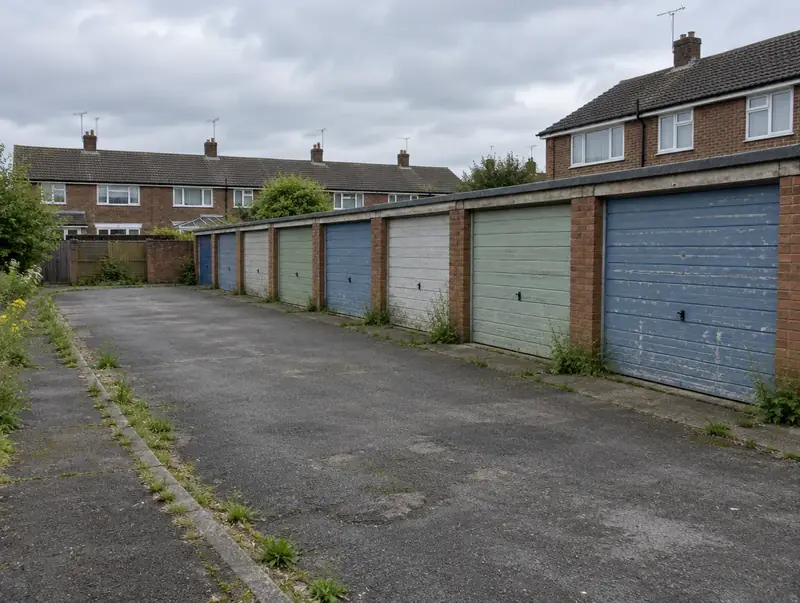
Garage courts are blocks of lock-up garages, often behind houses, that are now too small for many modern cars. They can make good small housing sites, and we buy garage courts and small yards across England and Wales.
- Size
- About 1 to 10 homes
- Planning
- Usually without
- Areas
- England & Wales
- Ways we buy
- Outright or conditional
What garage courts and yards do we want?
A garage court or small yard is often underused land in the middle of a residential area. Redeveloping it for a few homes can work well, provided access, parking and neighbours are handled carefully.
- Lock-up garage blocks, let or empty
- Parking courts behind houses
- Small service yards and compounds
- Sites reached by a shared drive or lane
- Courts where some garages are let on licences
- Land with or without planning history
What decides whether a site works?
If you own a block of garages or a small service yard, it may be a housing site. We look at the access, the existing tenants and any rights of way across the land.
Access rights
Neighbours may have rights to pass over the court to reach their own land.
Displaced parking
Councils often want to know where current users will park.
Overlooking
Courts are usually close to existing homes, so design must protect privacy.
Licences and tenants
Garage licences are usually easy to end, but we check the terms.
Ground conditions
Old fuel or asbestos garage roofs need sensible handling.
Is it different in England and Wales?
England. The Planning and Infrastructure Act 2025 introduced Environmental Delivery Plans and a Nature Restoration Levy in England, which over time may offer an alternative to site-by-site mitigation for some environmental issues.
Wales. In Wales a planning permission usually lasts five years before work must begin, and land purchases are subject to Land Transaction Tax rather than Stamp Duty Land Tax.
What should I have ready?
None of this is essential to get started, but it helps us give a firmer view sooner:
- A plan of the court and access
- Number of garages and how many are let
- Licence or tenancy terms
- Any rights of way you know about
How we buy
Ways to sell garage courts and yards to us
Where
Garage courts and yards wanted by area
Choose your county to see what we look for locally and the towns we cover.
England
- Bedfordshire
- Berkshire
- Bristol
- Buckinghamshire
- Cambridgeshire
- Cheshire
- Cornwall
- County Durham
- Cumbria
- Derbyshire
- Devon
- Dorset
- The East Riding of Yorkshire
- East Sussex
- Essex
- Gloucestershire
- Greater London
- Greater Manchester
- Hampshire
- Herefordshire
- Hertfordshire
- The Isle of Wight
- Kent
- Lancashire
- Leicestershire
- Lincolnshire
- Merseyside
- Norfolk
- North Yorkshire
- Northamptonshire
- Northumberland
- Nottinghamshire
- Oxfordshire
- Rutland
- Shropshire
- Somerset
- South Yorkshire
- Staffordshire
- Suffolk
- Surrey
- Tyne and Wear
- Warwickshire
- The West Midlands
- West Sussex
- West Yorkshire
- Wiltshire
- Worcestershire
Wales
What happens next
Send the basics
A postcode or plan and a few lines about the land are enough to start.
We do the homework
We check planning history, policy, flood maps and access at no cost to you.
We explain the options
You get a written proposal covering price, structure and timing.
Agree and proceed
Once you are happy, solicitors are instructed and the deal moves forward.
Questions
Garage courts and yards: common questions
Some garages are still rented. Is that a problem?
Usually not. Garage lets are often on short licences. We look at the terms and allow time to end them properly.
Who else might have rights over the court?
Neighbours sometimes have rights of way across garage courts. We check the title and any deeds for this.
How many homes could fit?
It depends on the size and shape of the court and its access; small courts may take one or two homes, larger ones more.
Do you buy council or housing association garages?
We are happy to discuss sites with public bodies and housing providers, subject to their own disposal rules.