
Redundant buildings wanted in Oxfordshire
Looking to sell redundant buildings near Oxfordshire? We assess every site on its merits and explain the options in plain English.
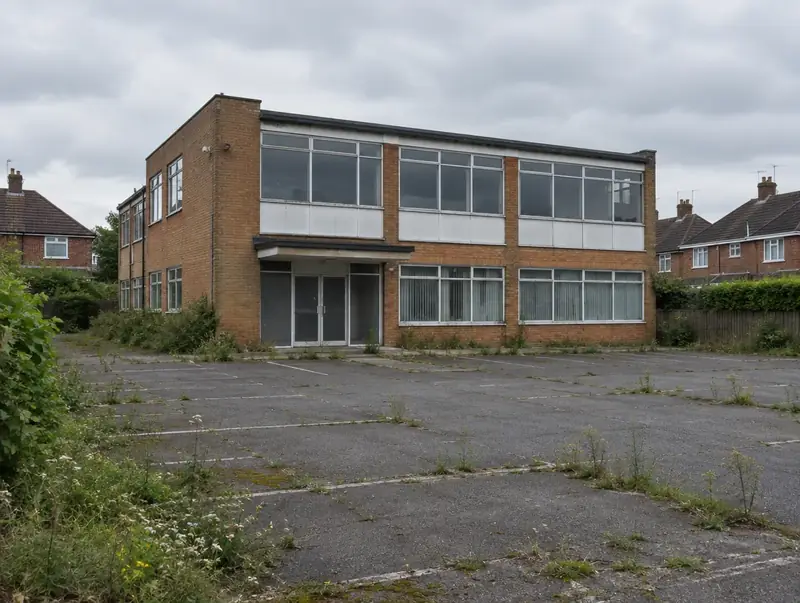
If you own a building that no longer works for its original purpose, it may suit residential conversion or redevelopment. We consider offices, retail, pubs, community and religious buildings, and more.
- Size
- Any
- Planning
- With or without
- Areas
- England & Wales
- Ways we buy
- Outright or conditional
What redundant buildings we want near Oxfordshire
Oxfordshire combines the city of Oxford with towns such as Banbury, Bicester, Witney, Abingdon, Didcot, Carterton and Kidlington and many villages. Green Belt surrounds Oxford, and the Cotswolds, Chilterns and North Wessex Downs National Landscapes cover much of the countryside. Typical sites include edge-of-town extensions, previously developed land, farm buildings and infill plots, with grey belt now relevant on parts of the Oxford fringe.
- Shops with upper floors or whole retail buildings
- Buildings with or without existing consent
- Buildings within towns and villages
- Sites where demolition and rebuilding may be better than conversion
East West Rail and the science and technology economy around Oxford, Harwell and Culham drive demand for new homes. Flood risk from the Thames and Cherwell affects Oxford and nearby villages, while Bicester and Didcot have expanded substantially through planned growth.
Checks we make on redundant buildings in Oxfordshire
Prior approval (England)
Some changes of use can be made through permitted development with prior approval.
Building condition
Structure, layout and light decide whether conversion makes sense.
Parking and amenity
Homes need outdoor space, bins and parking where the council expects it.
In England, a planning permission normally has to be implemented within three years unless the council sets a different period, and councils aim to decide minor applications within eight weeks and major ones within thirteen.
English councils keep brownfield land registers, and some previously developed sites can be granted permission in principle, a quicker way of establishing whether housing is acceptable before technical details are settled.
Some land in Oxfordshire is designated Green Belt. If your land is within it, it may still qualify as grey belt or previously developed land under national policy, subject to the Golden Rules.
How we could buy your land in Oxfordshire
Outright purchase
Common for empty buildings, with conversion costs reflected in the price.
Outright purchaseSubject-to-planning contract
Used where consent or prior approval is still needed.
Subject-to-planning contractOption agreement
You grant us the right to buy within a set period, usually for an option premium, while we pursue planning.
Option agreementWhat happens after you get in touch
Tell us about the land
Use the form or call us with the location and a rough outline of the site.
Free appraisal
We review title, planning and constraints and tell you honestly what we think.
Written offer
If the site suits us, we set out an offer and the way we propose to buy.
Solicitors take over
Your solicitor and ours agree the contract; we keep you informed throughout.
Redundant buildings in Oxfordshire: common questions
Can a former pub be converted to homes?
Sometimes. Pubs are often protected by local policy, and the August 2026 NPPF aims to avoid loss of valued community facilities, so evidence about viability and need matters.
My building is listed. Is that a problem?
Not necessarily, but it means listed building consent as well as planning permission, and design must respect the building's significance.
Do you buy redundant buildings in Oxfordshire?
Yes. We buy redundant buildings in Oxfordshire and throughout Oxfordshire, as well as elsewhere in England and Wales. Tell us where the land is and we will give you a free appraisal.
Which planning rules apply to land in Oxfordshire?
As Oxfordshire is in England, national policy comes from the National Planning Policy Framework, revised in August 2026. Local policies in the council's development plan also apply.