
Redundant buildings wanted in Cornwall
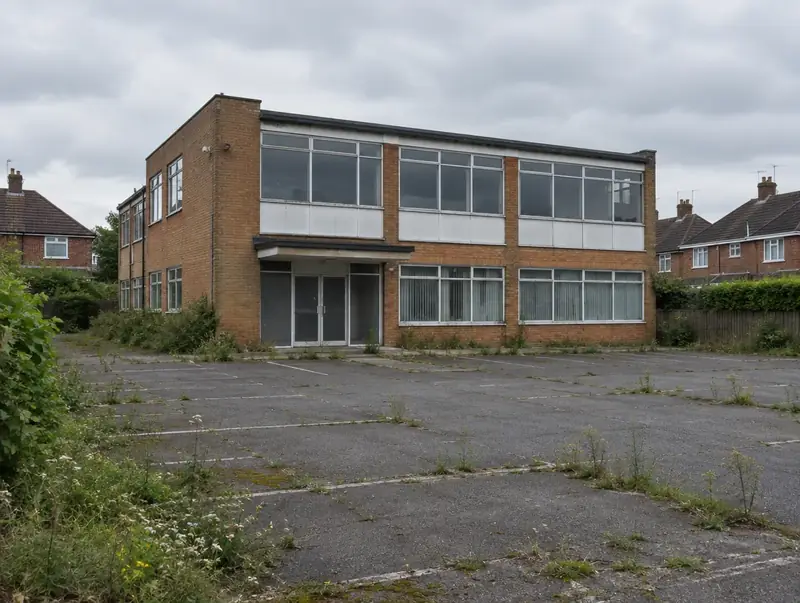
Development Land Wanted buys redundant buildings in Cornwall and right across England and Wales. Owners and agents are both welcome.
A redundant building is one whose original use has ended. Many make good homes through conversion, while others are better redeveloped. We look at the building, its planning position and any community or heritage interest before making an offer.
- Size
- Any
- Planning
- With or without
- Areas
- England & Wales
- Ways we buy
- Outright or conditional
Redundant buildings we are looking for in Cornwall
Cornwall has no Green Belt, but landscape designation is extensive: the Cornwall National Landscape covers large stretches of coast and countryside, alongside the Tamar Valley and Isles of Scilly National Landscapes. Settlements are dispersed, from Truro, Camborne, Redruth and St Austell to many small coastal and inland villages. Sites coming forward are often edge-of-settlement fields, farm buildings, former mining and china clay land, and rural exception sites for local needs.
- Vacant offices and commercial buildings
- Shops with upper floors or whole retail buildings
- Former pubs, halls, chapels and churches
- Buildings with or without existing consent
Second-home and holiday-let pressure has led to principal residence policies in some Cornish neighbourhood plans, and nutrient neutrality advice has applied in the River Camel catchment. Former mining land around Camborne and Redruth needs mining risk checks, while the A30 corridor towns attract more mainstream housing growth.
What decides whether a site in Cornwall works
Community value
Pubs and community buildings may be listed as assets of community value or protected by policy.
Prior approval (England)
Some changes of use can be made through permitted development with prior approval.
Building condition
Structure, layout and light decide whether conversion makes sense.
The August 2026 NPPF supports homes within reasonable walking distance (around 800 metres) of well-connected railway stations, with minimum densities of 35 homes per hectare, or 45 near higher-frequency stations.
In England, a planning permission normally has to be implemented within three years unless the council sets a different period, and councils aim to decide minor applications within eight weeks and major ones within thirteen.
Cornwall has no designated Green Belt, so the main policy questions near Cornwall are usually the settlement boundary, landscape and access.
How we could buy your land in Cornwall
Outright purchase
Common for empty buildings, with conversion costs reflected in the price.
Outright purchaseSubject-to-planning contract
Used where consent or prior approval is still needed.
Subject-to-planning contractHow a sale to us works
Get in touch
Tell us where the land is and what you know about it.
Site review
We look at the land, its planning position and anything that could affect it.
Proposal
We put our proposal in writing, with no obligation to accept.
Exchange and completion
If you go ahead, contracts are exchanged and the sale completes on the agreed terms.
Frequently asked in Cornwall
My building is listed. Is that a problem?
Not necessarily, but it means listed building consent as well as planning permission, and design must respect the building's significance.
Should I strip out the building before selling?
No. Leave it as it is and tell us about its condition; we will assess it as found.
Do you buy redundant buildings in Cornwall?
Yes. We buy redundant buildings in Cornwall and throughout Cornwall, as well as elsewhere in England and Wales. Tell us where the land is and we will give you a free appraisal.
How quickly can you look at a site in Cornwall?
For most sites we can give an initial view once we have the location and a plan. Detailed checks follow if the land looks suitable.