
Redundant buildings wanted in Lancashire
We are actively looking for redundant buildings in Lancashire and the surrounding area, with or without planning permission.
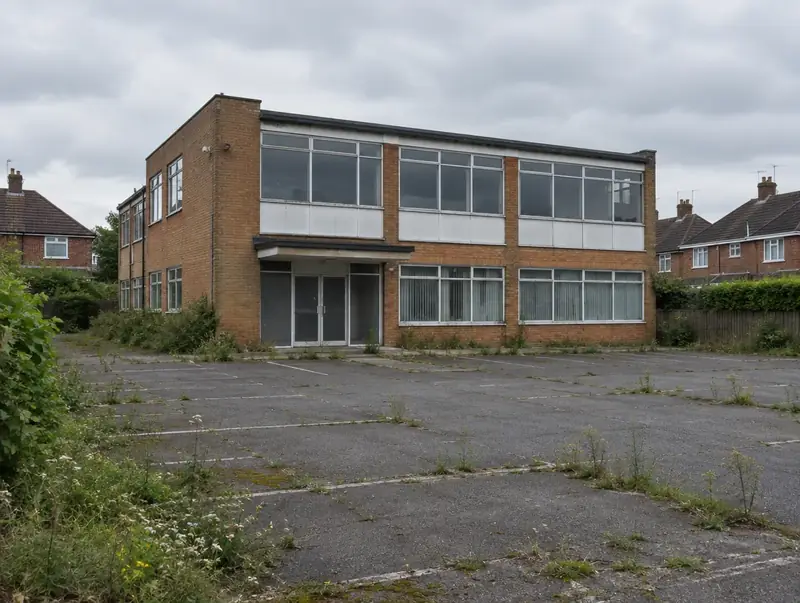
Redundant buildings are empty or underused buildings, such as offices, shops, pubs, chapels or halls, that could be converted or replaced with homes. We assess both conversion and redevelopment and buy suitable buildings across England and Wales.
- Size
- Any
- Planning
- With or without
- Areas
- England & Wales
- Ways we buy
- Outright or conditional
What redundant buildings we want near Lancashire
Lancashire includes Preston, Blackburn, Burnley, Blackpool and Lancaster alongside the Fylde coast resorts, the East Lancashire mill towns and many rural villages. Green Belt covers much of the south and east, between the Merseyside and Greater Manchester conurbations, and smaller areas around Blackpool and Lancaster. Former mill and industrial land, edge-of-town fields and village infill are the usual sources of housing land, with grey belt now relevant on parts of the urban fringe.
- Vacant offices and commercial buildings
- Shops with upper floors or whole retail buildings
- Buildings with or without existing consent
- Sites where demolition and rebuilding may be better than conversion
The Forest of Bowland and Arnside and Silverdale National Landscapes and a small part of the Yorkshire Dales National Park cover the rural north and east. Flood risk on the Fylde coast, the Ribble and the Lune shapes many sites, and the M6, M55 and M65 corridors link the main towns.
What decides whether a site in Lancashire works
Community value
Pubs and community buildings may be listed as assets of community value or protected by policy.
Heritage
Listed buildings and conservation areas need careful design and extra consents.
Parking and amenity
Homes need outdoor space, bins and parking where the council expects it.
In England, the revised National Planning Policy Framework published on 17 August 2026 replaced the old "tilted balance" with new settlement policies: development within a settlement should normally be approved unless the harm substantially outweighs the benefits, while land outside a settlement can gain support in defined circumstances.
National policy in England now recognises "medium development" of 10 to 49 homes on sites up to 2.5 hectares, and asks councils to allocate at least 10% of their housing on sites of one hectare or less and a further 10% on sites of one to 2.5 hectares.
Redundant buildings wanted in towns across Lancashire
Four ways to sell to us
Outright purchase
Common for empty buildings, with conversion costs reflected in the price.
Outright purchaseSubject-to-planning contract
We agree a price now and complete once a satisfactory planning permission is granted.
Subject-to-planning contractFrom first call to completion
Tell us about the land
Use the form or call us with the location and a rough outline of the site.
Free appraisal
We review title, planning and constraints and tell you honestly what we think.
Written offer
If the site suits us, we set out an offer and the way we propose to buy.
Solicitors take over
Your solicitor and ours agree the contract; we keep you informed throughout.
Questions owners in Lancashire ask
My building is listed. Is that a problem?
Not necessarily, but it means listed building consent as well as planning permission, and design must respect the building's significance.
Do you buy buildings that need demolition?
Yes, where redevelopment is the better option and the planning position supports it.
Can an agent introduce land in Lancashire to you?
Yes. Estate agents, land agents and planning consultants can introduce sites with the owner's consent. Any fee is agreed in writing before details are shared, confirmed by the owner in writing and paid only on completion.
Which planning rules apply to land in Lancashire?
As Lancashire is in England, national policy comes from the National Planning Policy Framework, revised in August 2026. Local policies in the council's development plan also apply.