
Redundant buildings wanted in Cambridgeshire
If you own redundant buildings in or around Cambridgeshire, we would like to hear about it. We buy directly and give a free, no-obligation appraisal.
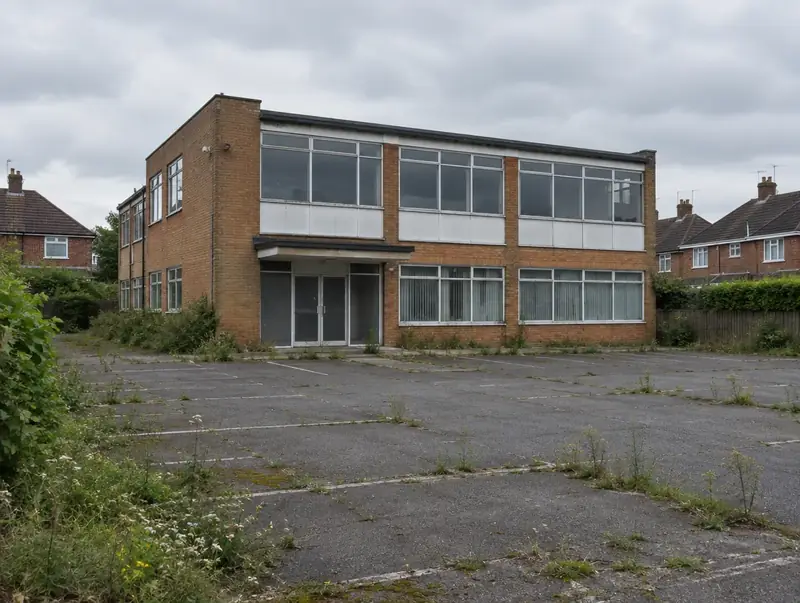
Redundant buildings are empty or underused buildings, such as offices, shops, pubs, chapels or halls, that could be converted or replaced with homes. We assess both conversion and redevelopment and buy suitable buildings across England and Wales.
- Size
- Any
- Planning
- With or without
- Areas
- England & Wales
- Ways we buy
- Outright or conditional
What redundant buildings we want near Cambridgeshire
Cambridgeshire combines the fast-growing Cambridge area and Peterborough with Fenland market towns such as Wisbech, March and Ely and the towns of St Neots, Huntingdon and St Ives. A Green Belt surrounds Cambridge, while much of the north lies in the low-lying Fens, where flood zone status is often the deciding factor. Typical sites include edge-of-village land, former agricultural yards and larger strategic land promoted for new communities.
- Vacant offices and commercial buildings
- Shops with upper floors or whole retail buildings
- Former pubs, halls, chapels and churches
- Buildings with or without existing consent
Water supply and wastewater capacity have been recurring issues for growth around Cambridge, and Fenland sites usually need careful flood risk evidence. Away from the city, small sites on the edges of villages and market towns along the A14, A10 and A1 corridors are a common source of new housing land.
What decides whether a site in Cambridgeshire works
Community value
Pubs and community buildings may be listed as assets of community value or protected by policy.
Heritage
Listed buildings and conservation areas need careful design and extra consents.
Parking and amenity
Homes need outdoor space, bins and parking where the council expects it.
Where an English council cannot show a five-year supply of housing land, or its Housing Delivery Test result falls below 75%, the August 2026 NPPF can give policy support to suitable housing outside settlement boundaries.
National policy in England now recognises "medium development" of 10 to 49 homes on sites up to 2.5 hectares, and asks councils to allocate at least 10% of their housing on sites of one hectare or less and a further 10% on sites of one to 2.5 hectares.
Parts of Cambridgeshire are Green Belt, though not every town has any nearby. We check early whether a site is inside it and, if so, whether a grey belt or previously developed land case could apply.
Redundant buildings wanted in towns across Cambridgeshire
Choosing how to sell
Outright purchase
Common for empty buildings, with conversion costs reflected in the price.
Outright purchaseSubject-to-planning contract
We agree a price now and complete once a satisfactory planning permission is granted.
Subject-to-planning contractFrom first call to completion
Tell us about the land
Use the form or call us with the location and a rough outline of the site.
Free appraisal
We review title, planning and constraints and tell you honestly what we think.
Written offer
If the site suits us, we set out an offer and the way we propose to buy.
Solicitors take over
Your solicitor and ours agree the contract; we keep you informed throughout.
Frequently asked in Cambridgeshire
Should I strip out the building before selling?
No. Leave it as it is and tell us about its condition; we will assess it as found.
Do you buy buildings that need demolition?
Yes, where redevelopment is the better option and the planning position supports it.
Do you buy redundant buildings in Cambridgeshire?
Yes. We buy redundant buildings in Cambridgeshire and throughout Cambridgeshire, as well as elsewhere in England and Wales. Tell us where the land is and we will give you a free appraisal.
Which planning rules apply to land in Cambridgeshire?
As Cambridgeshire is in England, national policy comes from the National Planning Policy Framework, revised in August 2026. Local policies in the council's development plan also apply.