
Redundant buildings wanted in County Durham
If you own redundant buildings in or around County Durham, we would like to hear about it. We buy directly and give a free, no-obligation appraisal.
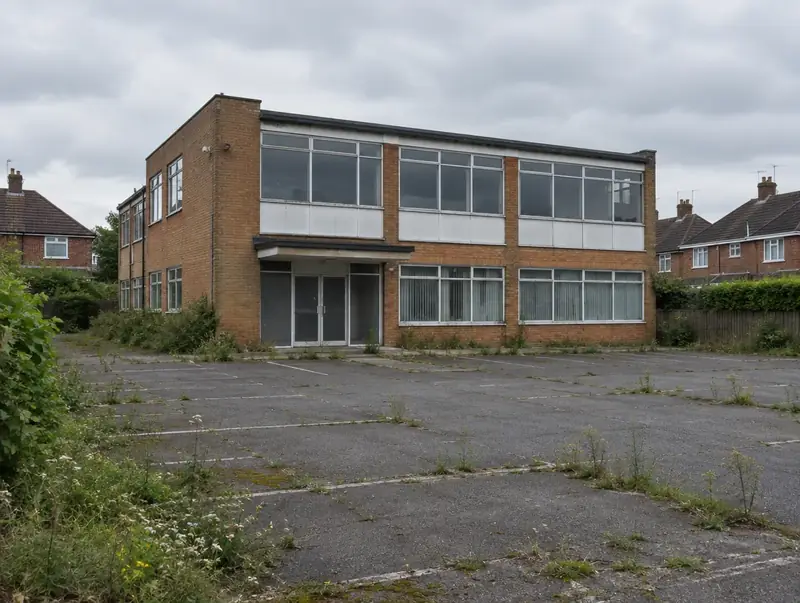
Redundant buildings are empty or underused buildings, such as offices, shops, pubs, chapels or halls, that could be converted or replaced with homes. We assess both conversion and redevelopment and buy suitable buildings across England and Wales.
- Size
- Any
- Planning
- With or without
- Areas
- England & Wales
- Ways we buy
- Outright or conditional
What redundant buildings we want near County Durham
County Durham here includes the Tees Valley towns of Darlington, Stockton-on-Tees and Hartlepool as well as Durham, Chester-le-Street, Consett, Bishop Auckland and the former coalfield villages. Green Belt protects land around Durham and between the Tyne and Wear conurbation and nearby towns, while the North Pennines National Landscape covers the west. Former colliery land, edge-of-village fields and older industrial sites are common sources of housing land.
- Former pubs, halls, chapels and churches
- Buildings with or without existing consent
- Buildings within towns and villages
- Sites where demolition and rebuilding may be better than conversion
The East Coast Main Line and A1(M) run north to south through the area, linking Darlington and Durham with Newcastle. Much of the county is former coalfield, so mining risk checks are routine, and nutrient neutrality advice has applied in parts of the Tees catchment draining to Teesmouth.
Before we make an offer in County Durham
Community value
Pubs and community buildings may be listed as assets of community value or protected by policy.
Heritage
Listed buildings and conservation areas need careful design and extra consents.
Prior approval (England)
Some changes of use can be made through permitted development with prior approval.
Since 6 August 2026, non-major development on sites of 0.2 hectares or less in England has generally been exempt from mandatory biodiversity net gain, unless priority habitat is affected. That makes many small sites simpler to bring forward.
In England, a planning permission normally has to be implemented within three years unless the council sets a different period, and councils aim to decide minor applications within eight weeks and major ones within thirteen.
Redundant buildings wanted in towns across County Durham
How we could buy your land in County Durham
Outright purchase
Common for empty buildings, with conversion costs reflected in the price.
Outright purchaseSubject-to-planning contract
Used where consent or prior approval is still needed.
Subject-to-planning contractHow a sale to us works
Tell us about the land
Use the form or call us with the location and a rough outline of the site.
Free appraisal
We review title, planning and constraints and tell you honestly what we think.
Written offer
If the site suits us, we set out an offer and the way we propose to buy.
Solicitors take over
Your solicitor and ours agree the contract; we keep you informed throughout.
Questions owners in County Durham ask
My building is listed. Is that a problem?
Not necessarily, but it means listed building consent as well as planning permission, and design must respect the building's significance.
Should I strip out the building before selling?
No. Leave it as it is and tell us about its condition; we will assess it as found.
Do you buy redundant buildings in County Durham?
Yes. We buy redundant buildings in County Durham and throughout County Durham, as well as elsewhere in England and Wales. Tell us where the land is and we will give you a free appraisal.
Which planning rules apply to land in County Durham?
As County Durham is in England, national policy comes from the National Planning Policy Framework, revised in August 2026. Local policies in the council's development plan also apply.