
Redundant buildings wanted in Cumbria
If you own redundant buildings in or around Cumbria, we would like to hear about it. We buy directly and give a free, no-obligation appraisal.
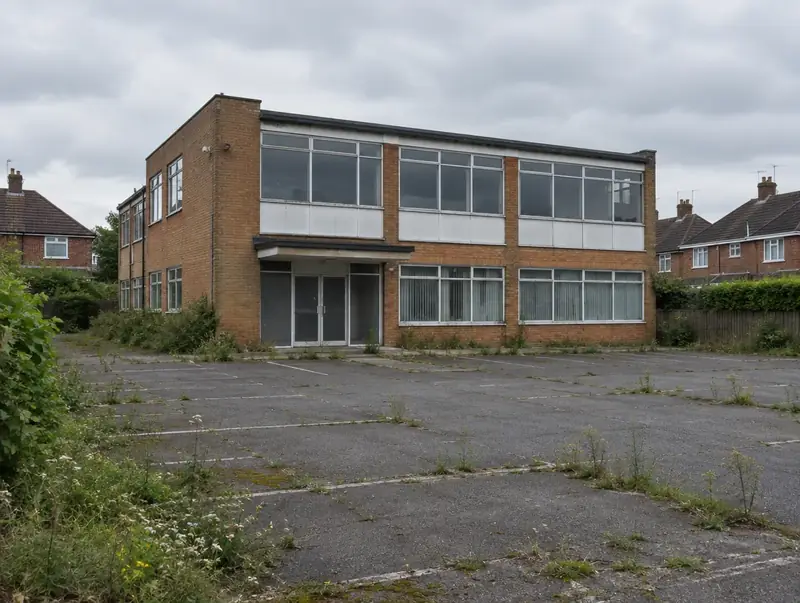
A redundant building is one whose original use has ended. Many make good homes through conversion, while others are better redeveloped. We look at the building, its planning position and any community or heritage interest before making an offer.
- Size
- Any
- Planning
- With or without
- Areas
- England & Wales
- Ways we buy
- Outright or conditional
Redundant buildings we are looking for in Cumbria
Cumbria has no Green Belt, but the Lake District National Park, part of the Yorkshire Dales National Park and the North Pennines, Arnside and Silverdale and Solway Coast National Landscapes cover much of the county. Housing land therefore concentrates around Carlisle, Kendal, Penrith and the west coast towns of Whitehaven, Workington and Barrow-in-Furness. Typical sites include edge-of-town fields, former industrial land on the coast and conversions of farm buildings.
- Shops with upper floors or whole retail buildings
- Former pubs, halls, chapels and churches
- Buildings within towns and villages
- Sites where demolition and rebuilding may be better than conversion
Nutrient neutrality advice has affected several Cumbrian catchments, including the Eden, the Derwent and Bassenthwaite Lake and the River Kent, so drainage solutions matter. The west coast's energy and port economy and the M6 and West Coast Main Line corridor through Penrith and Carlisle shape where most new homes are planned.
Checks we make on redundant buildings in Cumbria
Community value
Pubs and community buildings may be listed as assets of community value or protected by policy.
Heritage
Listed buildings and conservation areas need careful design and extra consents.
Parking and amenity
Homes need outdoor space, bins and parking where the council expects it.
In England, a planning permission normally has to be implemented within three years unless the council sets a different period, and councils aim to decide minor applications within eight weeks and major ones within thirteen.
The Planning and Infrastructure Act 2025 introduced Environmental Delivery Plans and a Nature Restoration Levy in England, which over time may offer an alternative to site-by-site mitigation for some environmental issues.
Cumbria has no designated Green Belt, so the main policy questions near Cumbria are usually the settlement boundary, landscape and access.
Redundant buildings wanted in towns across Cumbria
Four ways to sell to us
Outright purchase
Common for empty buildings, with conversion costs reflected in the price.
Outright purchaseSubject-to-planning contract
Used where consent or prior approval is still needed.
Subject-to-planning contractWhat happens after you get in touch
Send the basics
A postcode or plan and a few lines about the land are enough to start.
We do the homework
We check planning history, policy, flood maps and access at no cost to you.
We explain the options
You get a written proposal covering price, structure and timing.
Agree and proceed
Once you are happy, solicitors are instructed and the deal moves forward.
Questions owners in Cumbria ask
Can a former pub be converted to homes?
Sometimes. Pubs are often protected by local policy, and the August 2026 NPPF aims to avoid loss of valued community facilities, so evidence about viability and need matters.
Should I strip out the building before selling?
No. Leave it as it is and tell us about its condition; we will assess it as found.
Do you buy redundant buildings in Cumbria?
Yes. We buy redundant buildings in Cumbria and throughout Cumbria, as well as elsewhere in England and Wales. Tell us where the land is and we will give you a free appraisal.
Which planning rules apply to land in Cumbria?
As Cumbria is in England, national policy comes from the National Planning Policy Framework, revised in August 2026. Local policies in the council's development plan also apply.