
Farmland and paddocks wanted in Cambridgeshire
Looking to sell farmland and paddocks near Cambridgeshire? We assess every site on its merits and explain the options in plain English.
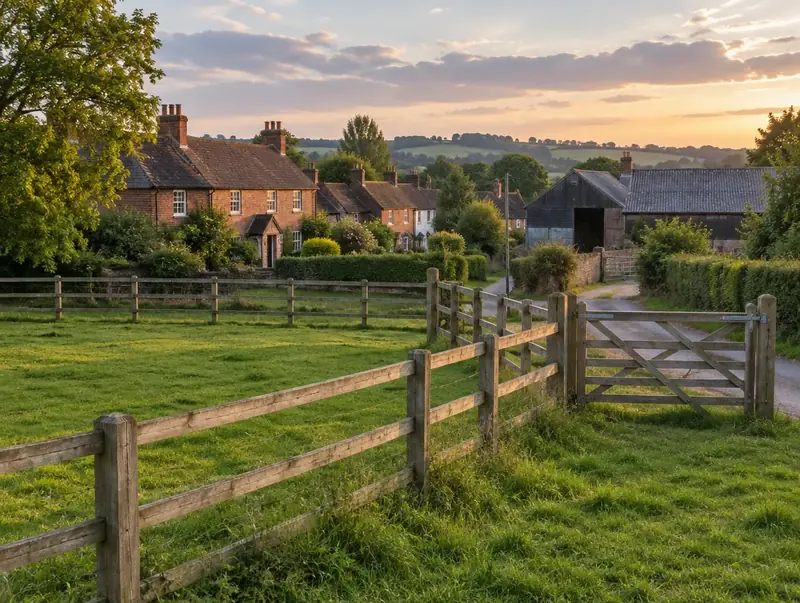
A paddock or field next to a village or town may have development potential, even if it has always been farmed. We assess how the land relates to the settlement, its access and the local plan, then explain which deal would suit.
- Size
- Paddocks to whole farms
- Planning
- Usually without
- Areas
- England & Wales
- Ways we buy
- Option, conditional or JV
The farmland and paddocks that interests us around Cambridgeshire
Cambridgeshire combines the fast-growing Cambridge area and Peterborough with Fenland market towns such as Wisbech, March and Ely and the towns of St Neots, Huntingdon and St Ives. A Green Belt surrounds Cambridge, while much of the north lies in the low-lying Fens, where flood zone status is often the deciding factor. Typical sites include edge-of-village land, former agricultural yards and larger strategic land promoted for new communities.
- Fields and paddocks adjoining a town, village or suburb
- Parcels from a few acres to whole holdings
- Land put forward to a local plan or call for sites
- Land let on a farm business tenancy or grazing licence
Water supply and wastewater capacity have been recurring issues for growth around Cambridge, and Fenland sites usually need careful flood risk evidence. Away from the city, small sites on the edges of villages and market towns along the A14, A10 and A1 corridors are a common source of new housing land.
What usually makes or breaks it
Relationship to the settlement
Land that reads as an extension of a place is usually more promising than isolated fields.
Farm schemes
Environmental and payment schemes may have obligations to unwind or agree.
Landscape
Protected landscapes and sensitive views limit what may be acceptable.
Since 6 August 2026, non-major development on sites of 0.2 hectares or less in England has generally been exempt from mandatory biodiversity net gain, unless priority habitat is affected. That makes many small sites simpler to bring forward.
In England, a planning permission normally has to be implemented within three years unless the council sets a different period, and councils aim to decide minor applications within eight weeks and major ones within thirteen.
Parts of Cambridgeshire are Green Belt, though not every town has any nearby. We check early whether a site is inside it and, if so, whether a grey belt or previously developed land case could apply.
Farmland and paddocks wanted in towns across Cambridgeshire
Choosing how to sell
Subject-to-planning contract
Works well for smaller paddocks and edge-of-village fields.
Subject-to-planning contractOption agreement
You grant us the right to buy within a set period, usually for an option premium, while we pursue planning.
Option agreementJoint venture
You contribute the land, we fund and manage planning and delivery, and the proceeds are shared as agreed.
Joint ventureFrom first call to completion
Tell us about the land
Use the form or call us with the location and a rough outline of the site.
Free appraisal
We review title, planning and constraints and tell you honestly what we think.
Written offer
If the site suits us, we set out an offer and the way we propose to buy.
Solicitors take over
Your solicitor and ours agree the contract; we keep you informed throughout.
Your questions answered
Can I keep farming while you pursue planning?
Yes. Under an option or a conditional contract the land normally stays in your hands, and in use, until completion.
How much land do you need?
Anything from a single paddock to larger holdings. Smaller parcels next to villages can be very suitable.
Do you buy farmland and paddocks in Cambridgeshire?
Yes. We buy farmland and paddocks in Cambridgeshire and throughout Cambridgeshire, as well as elsewhere in England and Wales. Tell us where the land is and we will give you a free appraisal.
Which planning rules apply to land in Cambridgeshire?
As Cambridgeshire is in England, national policy comes from the National Planning Policy Framework, revised in August 2026. Local policies in the council's development plan also apply.