
Garden and backland plots wanted in Cambridgeshire
We are actively looking for garden and backland plots in Cambridgeshire and the surrounding area, with or without planning permission.
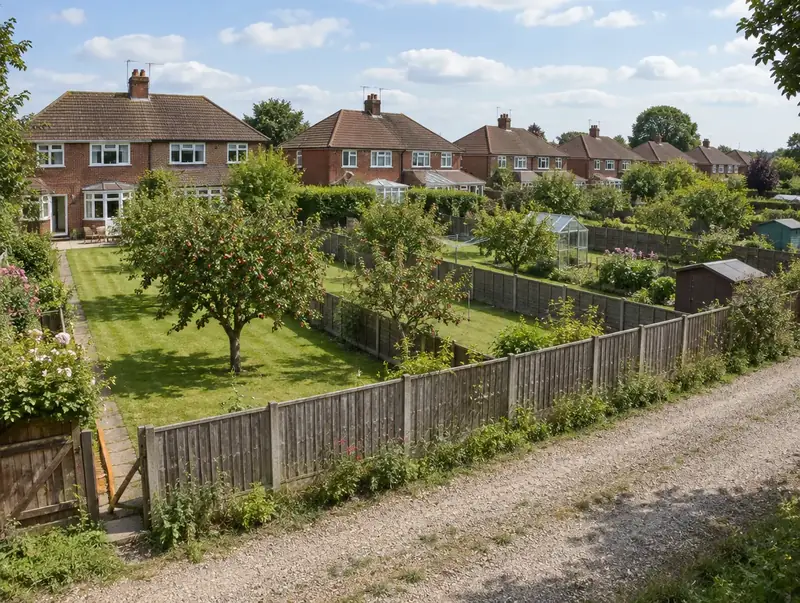
If you have a long garden, or land behind your house with access to a lane or road, it may be a backland plot. We assess access, neighbours and the council's policy on garden land before suggesting a way forward.
- Size
- 1 to 20 homes typically
- Planning
- Usually without
- Areas
- England & Wales
- Ways we buy
- Conditional or outright
Garden and backland plots we are looking for in Cambridgeshire
Cambridgeshire combines the fast-growing Cambridge area and Peterborough with Fenland market towns such as Wisbech, March and Ely and the towns of St Neots, Huntingdon and St Ives. A Green Belt surrounds Cambridge, while much of the north lies in the low-lying Fens, where flood zone status is often the deciding factor. Typical sites include edge-of-village land, former agricultural yards and larger strategic land promoted for new communities.
- Several neighbouring gardens that could be combined
- Land behind houses with an existing drive or gap for access
- Paddocks and orchards behind homes on the edge of a village
- Sites with or without previous applications
Water supply and wastewater capacity have been recurring issues for growth around Cambridge, and Fenland sites usually need careful flood risk evidence. Away from the city, small sites on the edges of villages and market towns along the A14, A10 and A1 corridors are a common source of new housing land.
What decides whether a site in Cambridgeshire works
Access width
The drive or road into the plot must be safe for cars, bins and emergency vehicles.
Local garden policy
Some councils resist garden development; others support it where character is respected.
Your own property
Selling garden land changes your home, so we plan boundaries and access carefully.
In England, the revised National Planning Policy Framework published on 17 August 2026 replaced the old "tilted balance" with new settlement policies: development within a settlement should normally be approved unless the harm substantially outweighs the benefits, while land outside a settlement can gain support in defined circumstances.
The August 2026 NPPF supports homes within reasonable walking distance (around 800 metres) of well-connected railway stations, with minimum densities of 35 homes per hectare, or 45 near higher-frequency stations.
Garden and backland plots wanted in towns across Cambridgeshire
Ways to sell garden and backland plots in Cambridgeshire
Subject-to-planning contract
The usual route: we apply and you only sell if permission is granted.
Subject-to-planning contractOption agreement
You grant us the right to buy within a set period, usually for an option premium, while we pursue planning.
Option agreementThe next steps
Get in touch
Tell us where the land is and what you know about it.
Site review
We look at the land, its planning position and anything that could affect it.
Proposal
We put our proposal in writing, with no obligation to accept.
Exchange and completion
If you go ahead, contracts are exchanged and the sale completes on the agreed terms.
Garden and backland plots in Cambridgeshire: common questions
My neighbours might sell too. Does that help?
Often, yes. Combining gardens can create a better site and access. We can talk to each owner and keep the arrangement fair.
What if my mortgage lender says no?
Lenders usually agree where the sale reduces the debt or the remaining security is adequate. We build time for this into the process.
Can an agent introduce land in Cambridgeshire to you?
Yes. Estate agents, land agents and planning consultants can introduce sites with the owner's consent. Any fee is agreed in writing before details are shared, confirmed by the owner in writing and paid only on completion.
Do I need to pay anything to have land in Cambridgeshire assessed?
No. Our appraisal is free and there is no obligation to sell to us.