
Redundant buildings wanted in Cambridge
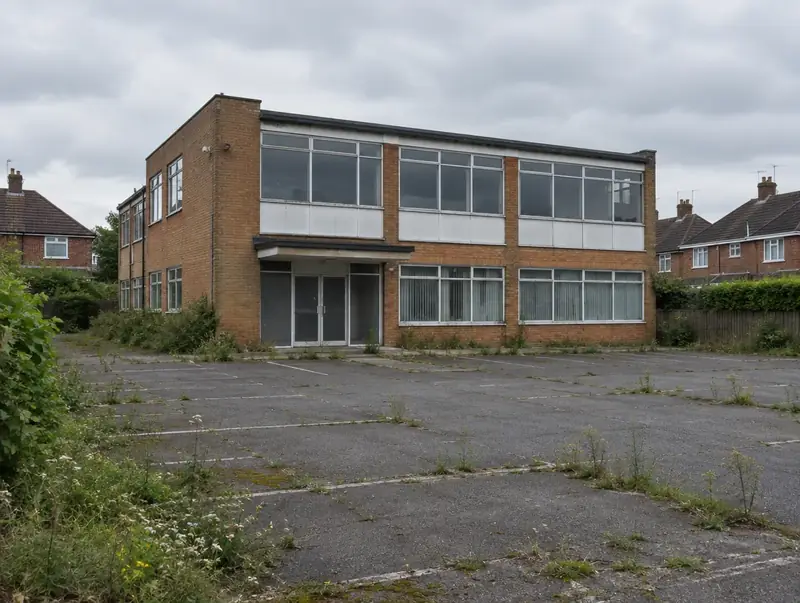
If you own redundant buildings in or around Cambridge, we would like to hear about it. We buy directly and give a free, no-obligation appraisal.
A redundant building is one whose original use has ended. Many make good homes through conversion, while others are better redeveloped. We look at the building, its planning position and any community or heritage interest before making an offer.
- Size
- Any
- Planning
- With or without
- Areas
- England & Wales
- Ways we buy
- Outright or conditional
Redundant buildings we are looking for in Cambridge
Redundant buildings in Cambridge often sit in the heart of things, close to shops and transport, which can make them strong residential sites. As the county town of Cambridgeshire, Cambridge anchors the area we cover here, along with Royston, St Ives and Newmarket.
- Shops with upper floors or whole retail buildings
- Former pubs, halls, chapels and churches
- Buildings within towns and villages
- Sites where demolition and rebuilding may be better than conversion
Cambridgeshire combines the fast-growing Cambridge area and Peterborough with Fenland market towns such as Wisbech, March and Ely and the towns of St Neots, Huntingdon and St Ives. A Green Belt surrounds Cambridge, while much of the north lies in the low-lying Fens, where flood zone status is often the deciding factor. Typical sites include edge-of-village land, former agricultural yards and larger strategic land promoted for new communities.
What usually makes or breaks it
Community value
Pubs and community buildings may be listed as assets of community value or protected by policy.
Prior approval (England)
Some changes of use can be made through permitted development with prior approval.
Parking and amenity
Homes need outdoor space, bins and parking where the council expects it.
In England, the revised National Planning Policy Framework published on 17 August 2026 replaced the old "tilted balance" with new settlement policies: development within a settlement should normally be approved unless the harm substantially outweighs the benefits, while land outside a settlement can gain support in defined circumstances.
We are based in Great Barr, Birmingham, around 89 miles from Cambridge, and we travel to see sites across England and Wales.
Four ways to sell to us
Outright purchase
Common for empty buildings, with conversion costs reflected in the price.
Outright purchaseSubject-to-planning contract
Used where consent or prior approval is still needed.
Subject-to-planning contractWhat happens after you get in touch
Get in touch
Tell us where the land is and what you know about it.
Site review
We look at the land, its planning position and anything that could affect it.
Proposal
We put our proposal in writing, with no obligation to accept.
Exchange and completion
If you go ahead, contracts are exchanged and the sale completes on the agreed terms.
Questions owners in Cambridge ask
Can a former pub be converted to homes?
Sometimes. Pubs are often protected by local policy, and the August 2026 NPPF aims to avoid loss of valued community facilities, so evidence about viability and need matters.
Should I strip out the building before selling?
No. Leave it as it is and tell us about its condition; we will assess it as found.
Is Cambridge too far from our Birmingham base?
No. We are based in Great Barr, Birmingham, about 89 miles from Cambridge, and we look at land right across England and Wales.
Do I need to pay anything to have land in Cambridge assessed?
No. Our appraisal is free and there is no obligation to sell to us.