
Commercial and industrial sites wanted in Cambridgeshire
We are actively looking for commercial and industrial sites in Cambridgeshire and the surrounding area, with or without planning permission.
Commercial and industrial sites can sometimes be redeveloped for housing, particularly when they sit among homes or are no longer needed for business. We assess whether a change to residential is realistic and buy suitable sites across England and Wales.
- Size
- Any
- Planning
- With or without
- Areas
- England & Wales
- Ways we buy
- Outright or conditional
The commercial and industrial sites that interests us around Cambridgeshire
Cambridgeshire combines the fast-growing Cambridge area and Peterborough with Fenland market towns such as Wisbech, March and Ely and the towns of St Neots, Huntingdon and St Ives. A Green Belt surrounds Cambridge, while much of the north lies in the low-lying Fens, where flood zone status is often the deciding factor. Typical sites include edge-of-village land, former agricultural yards and larger strategic land promoted for new communities.
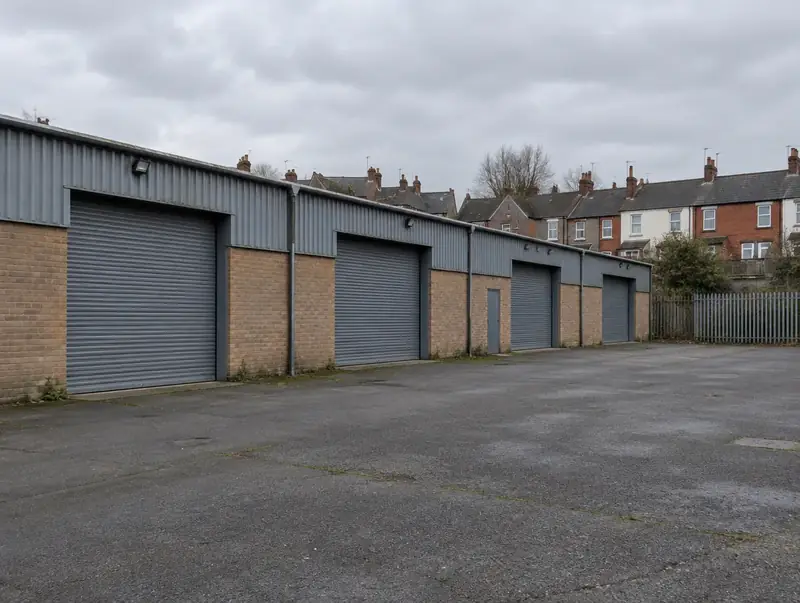
- Industrial units and yards within residential areas
- Commercial land that is vacant or underused
- Builders' yards, depots and storage land
- Garage, workshop and showroom sites
Water supply and wastewater capacity have been recurring issues for growth around Cambridge, and Fenland sites usually need careful flood risk evidence. Away from the city, small sites on the edges of villages and market towns along the A14, A10 and A1 corridors are a common source of new housing land.
What decides whether a site in Cambridgeshire works
Contamination
Past industrial uses usually need investigation.
Neighbouring businesses
Homes next to noisy uses may need mitigation or may not be acceptable.
Permitted development (England)
Some changes from commercial to residential use can be made through prior approval rather than a full application.
The August 2026 NPPF supports homes within reasonable walking distance (around 800 metres) of well-connected railway stations, with minimum densities of 35 homes per hectare, or 45 near higher-frequency stations.
English councils keep brownfield land registers, and some previously developed sites can be granted permission in principle, a quicker way of establishing whether housing is acceptable before technical details are settled.
Commercial and industrial sites wanted in towns across Cambridgeshire
Choosing how to sell
Outright purchase
We agree a price and buy the land, with no planning condition attached.
Outright purchaseSubject-to-planning contract
We agree a price now and complete once a satisfactory planning permission is granted.
Subject-to-planning contractJoint venture
You contribute the land, we fund and manage planning and delivery, and the proceeds are shared as agreed.
Joint ventureWhat happens after you get in touch
Get in touch
Tell us where the land is and what you know about it.
Site review
We look at the land, its planning position and anything that could affect it.
Proposal
We put our proposal in writing, with no obligation to accept.
Exchange and completion
If you go ahead, contracts are exchanged and the sale completes on the agreed terms.
Your questions answered
Will the council object to losing business land?
Some councils protect employment land. Evidence that the site is no longer needed or suitable for business can help.
Do I need to market the site first?
Not to sell to us. Marketing evidence can, however, support a planning case for change of use.
Which planning rules apply to land in Cambridgeshire?
As Cambridgeshire is in England, national policy comes from the National Planning Policy Framework, revised in August 2026. Local policies in the council's development plan also apply.
Do I need to pay anything to have land in Cambridgeshire assessed?
No. Our appraisal is free and there is no obligation to sell to us.