
Infill plots wanted in Kent
We want to hear from owners of infill plots in Kent. There is nothing to pay us, and you are under no obligation.
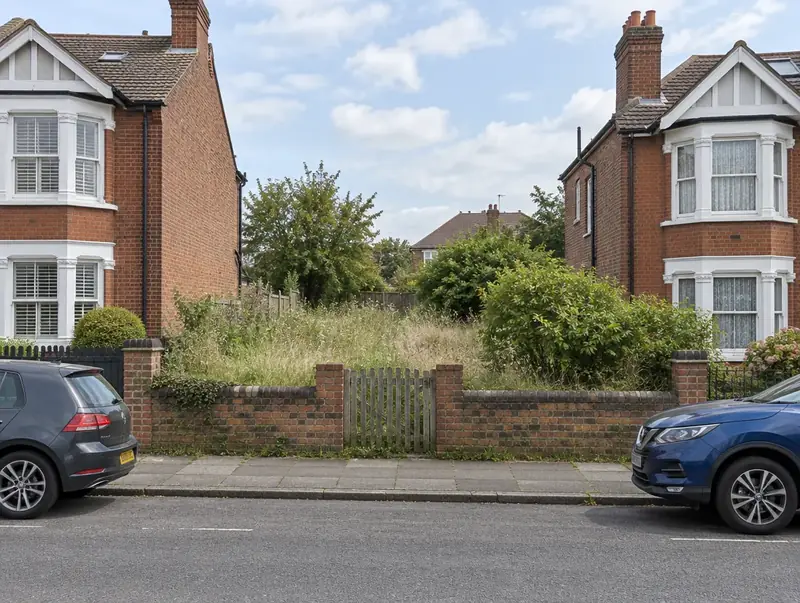
An infill plot is a gap in an otherwise built-up frontage, between existing houses or buildings, where one or more new homes could fit. These small sites are often in sought-after streets and can be well suited to planning.
- Size
- 1 to 9 homes typically
- Planning
- With or without
- Areas
- England & Wales
- Ways we buy
- Outright or conditional
Is your land in Kent the kind we want?
Kent ranges from the Medway towns, Dartford and Gravesend on the Thames to Maidstone, Ashford, Canterbury, Tunbridge Wells and the coastal towns of Margate, Ramsgate, Folkestone and Dover. West Kent is largely Metropolitan Green Belt, while the Kent Downs and High Weald National Landscapes cover much of the countryside. Sites typically include edge-of-town fields, orchards and farmland, farm buildings, infill plots and brownfield land in the towns.
- Side gardens with their own road frontage
- Corner plots within built-up areas
- Plots large enough for one or more homes with parking
- Land with or without an earlier planning history
Nutrient neutrality advice has affected the Stour catchment around Canterbury and Ashford because of the protected Stodmarsh wetlands. High Speed 1 stations and the M2, M20 and A2 corridors are a focus for growth, while coastal flood risk matters on the Thames and Swale estuaries and Romney Marsh.
What usually makes or breaks it
Neighbours' amenity
Overlooking, loss of light and outlook are the issues planners weigh most often.
Trees
Protected trees or trees in a conservation area can limit what fits.
Services
Connections for drainage, water and power need to be reachable.
In England, the revised National Planning Policy Framework published on 17 August 2026 replaced the old "tilted balance" with new settlement policies: development within a settlement should normally be approved unless the harm substantially outweighs the benefits, while land outside a settlement can gain support in defined circumstances.
In England, a planning permission normally has to be implemented within three years unless the council sets a different period, and councils aim to decide minor applications within eight weeks and major ones within thirteen.
Some land in Kent is designated Green Belt. If your land is within it, it may still qualify as grey belt or previously developed land under national policy, subject to the Golden Rules.
Choosing how to sell
Subject-to-planning contract
Common for infill: we apply, and you sell once permission is granted.
Subject-to-planning contractWhat happens after you get in touch
Send the basics
A postcode or plan and a few lines about the land are enough to start.
We do the homework
We check planning history, policy, flood maps and access at no cost to you.
We explain the options
You get a written proposal covering price, structure and timing.
Agree and proceed
Once you are happy, solicitors are instructed and the deal moves forward.
Frequently asked in Kent
How wide does an infill plot need to be?
There is no fixed figure; it depends on the street. A plot that allows a home similar in width to its neighbours, with space to the sides, is a good start.
Do small infill sites need biodiversity net gain?
In England, from 6 August 2026 most non-major sites of 0.2 hectares or less are exempt from mandatory BNG, unless priority habitat is affected. Wales uses a different approach.
Do you buy infill plots in Kent?
Yes. We buy infill plots in Kent and throughout Kent, as well as elsewhere in England and Wales. Tell us where the land is and we will give you a free appraisal.
Do I need to pay anything to have land in Kent assessed?
No. Our appraisal is free and there is no obligation to sell to us.