
Infill plots wanted in County Durham
We are actively looking for infill plots in County Durham and the surrounding area, with or without planning permission.
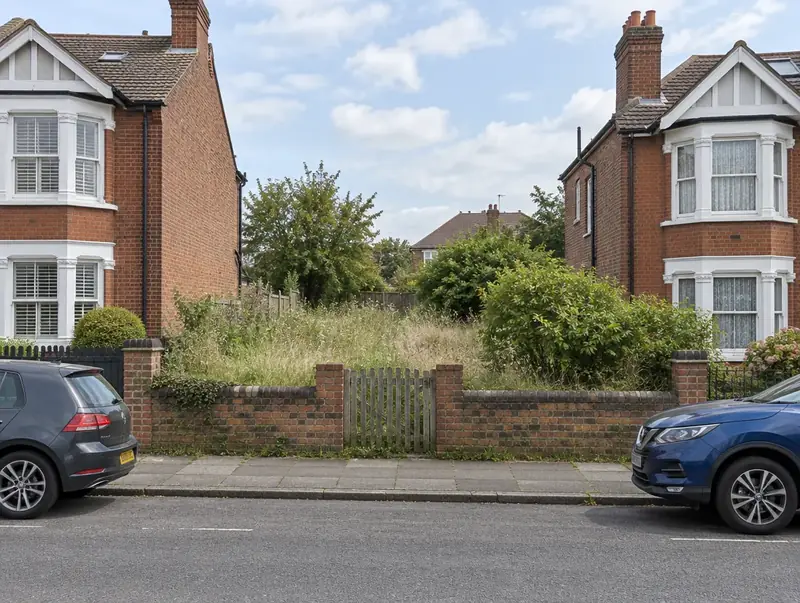
If you own a gap between buildings on a road, it may be an infill plot. We look at how new homes would sit alongside the neighbours, how they would be reached, and whether trees or drainage affect the space.
- Size
- 1 to 9 homes typically
- Planning
- With or without
- Areas
- England & Wales
- Ways we buy
- Outright or conditional
Is your land in County Durham the kind we want?
County Durham here includes the Tees Valley towns of Darlington, Stockton-on-Tees and Hartlepool as well as Durham, Chester-le-Street, Consett, Bishop Auckland and the former coalfield villages. Green Belt protects land around Durham and between the Tyne and Wear conurbation and nearby towns, while the North Pennines National Landscape covers the west. Former colliery land, edge-of-village fields and older industrial sites are common sources of housing land.
- Gaps in a street frontage between houses or other buildings
- Side gardens with their own road frontage
- Corner plots within built-up areas
- Plots large enough for one or more homes with parking
The East Coast Main Line and A1(M) run north to south through the area, linking Darlington and Durham with Newcastle. Much of the county is former coalfield, so mining risk checks are routine, and nutrient neutrality advice has applied in parts of the Tees catchment draining to Teesmouth.
What decides whether a site in County Durham works
Neighbours' amenity
Overlooking, loss of light and outlook are the issues planners weigh most often.
Trees
Protected trees or trees in a conservation area can limit what fits.
Services
Connections for drainage, water and power need to be reachable.
Since 6 August 2026, non-major development on sites of 0.2 hectares or less in England has generally been exempt from mandatory biodiversity net gain, unless priority habitat is affected. That makes many small sites simpler to bring forward.
National policy in England now recognises "medium development" of 10 to 49 homes on sites up to 2.5 hectares, and asks councils to allocate at least 10% of their housing on sites of one hectare or less and a further 10% on sites of one to 2.5 hectares.
Some land in County Durham is designated Green Belt. If your land is within it, it may still qualify as grey belt or previously developed land under national policy, subject to the Golden Rules.
Infill plots wanted in towns across County Durham
Choosing how to sell
Subject-to-planning contract
Common for infill: we apply, and you sell once permission is granted.
Subject-to-planning contractWhat happens after you get in touch
Get in touch
Tell us where the land is and what you know about it.
Site review
We look at the land, its planning position and anything that could affect it.
Proposal
We put our proposal in writing, with no obligation to accept.
Exchange and completion
If you go ahead, contracts are exchanged and the sale completes on the agreed terms.
Infill plots in County Durham: common questions
How wide does an infill plot need to be?
There is no fixed figure; it depends on the street. A plot that allows a home similar in width to its neighbours, with space to the sides, is a good start.
Will my neighbours be consulted?
Yes. The council consults neighbours on planning applications, and their comments are considered alongside policy.
Do you buy infill plots in County Durham?
Yes. We buy infill plots in County Durham and throughout County Durham, as well as elsewhere in England and Wales. Tell us where the land is and we will give you a free appraisal.
Do I need to pay anything to have land in County Durham assessed?
No. Our appraisal is free and there is no obligation to sell to us.