
Infill plots wanted in Buckinghamshire
Development Land Wanted buys infill plots in Buckinghamshire and right across England and Wales. Owners and agents are both welcome.
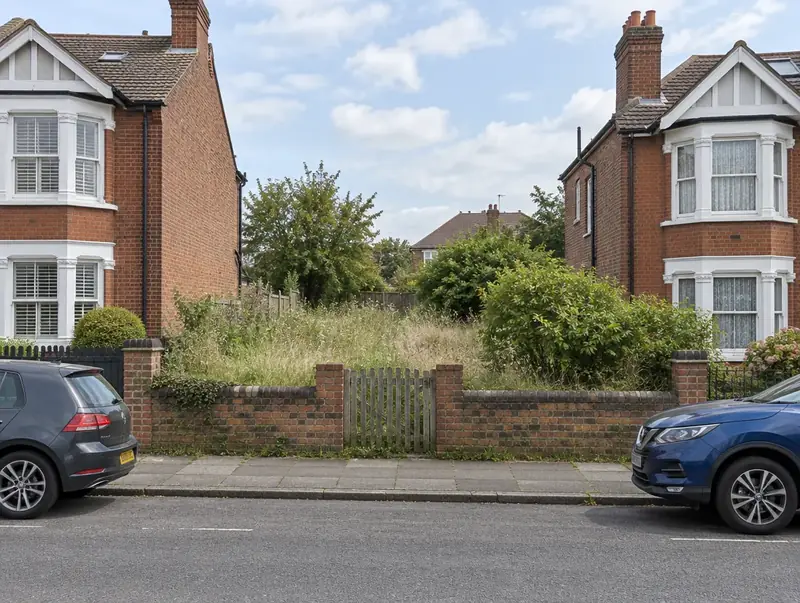
If you own a gap between buildings on a road, it may be an infill plot. We look at how new homes would sit alongside the neighbours, how they would be reached, and whether trees or drainage affect the space.
- Size
- 1 to 9 homes typically
- Planning
- With or without
- Areas
- England & Wales
- Ways we buy
- Outright or conditional
The infill plots that interests us around Buckinghamshire
Buckinghamshire runs from Milton Keynes in the north, through Aylesbury and the Vale, to High Wycombe, Amersham and the Chiltern towns in the south. The southern half is largely Metropolitan Green Belt and much of it lies in the Chilterns National Landscape, so sites there tend to be small, infill or previously developed. The north and the Aylesbury area see more edge-of-town greenfield land, farmland and strategic sites promoted through plan-making.
- Gaps in a street frontage between houses or other buildings
- Corner plots within built-up areas
- Small yards or garages between houses
- Land with or without an earlier planning history
The planned East West Rail route and the existing lines into Marylebone and Euston shape where growth is directed in Buckinghamshire. Village infill plots, redundant farm buildings and garden land are frequent in the rural parishes, while Milton Keynes and Aylesbury attract larger edge-of-town and regeneration sites.
Checks we make on infill plots in Buckinghamshire
Character of the street
New homes need to suit the building line, height and spacing of the street.
Neighbours' amenity
Overlooking, loss of light and outlook are the issues planners weigh most often.
Services
Connections for drainage, water and power need to be reachable.
National policy in England now recognises "medium development" of 10 to 49 homes on sites up to 2.5 hectares, and asks councils to allocate at least 10% of their housing on sites of one hectare or less and a further 10% on sites of one to 2.5 hectares.
In England, a planning permission normally has to be implemented within three years unless the council sets a different period, and councils aim to decide minor applications within eight weeks and major ones within thirteen.
Infill plots wanted in towns across Buckinghamshire
Choosing how to sell
Subject-to-planning contract
We agree a price now and complete once a satisfactory planning permission is granted.
Subject-to-planning contractOption agreement
You grant us the right to buy within a set period, usually for an option premium, while we pursue planning.
Option agreementThe next steps
Get in touch
Tell us where the land is and what you know about it.
Site review
We look at the land, its planning position and anything that could affect it.
Proposal
We put our proposal in writing, with no obligation to accept.
Exchange and completion
If you go ahead, contracts are exchanged and the sale completes on the agreed terms.
Your questions answered
How wide does an infill plot need to be?
There is no fixed figure; it depends on the street. A plot that allows a home similar in width to its neighbours, with space to the sides, is a good start.
Can I sell a plot next to my own house?
Often, yes. We make sure access, boundaries and services are set out so your own home is protected.
How quickly can you look at a site in Buckinghamshire?
For most sites we can give an initial view once we have the location and a plan. Detailed checks follow if the land looks suitable.
Which planning rules apply to land in Buckinghamshire?
As Buckinghamshire is in England, national policy comes from the National Planning Policy Framework, revised in August 2026. Local policies in the council's development plan also apply.