
Garden and backland plots wanted in County Durham
We are actively looking for garden and backland plots in County Durham and the surrounding area, with or without planning permission.
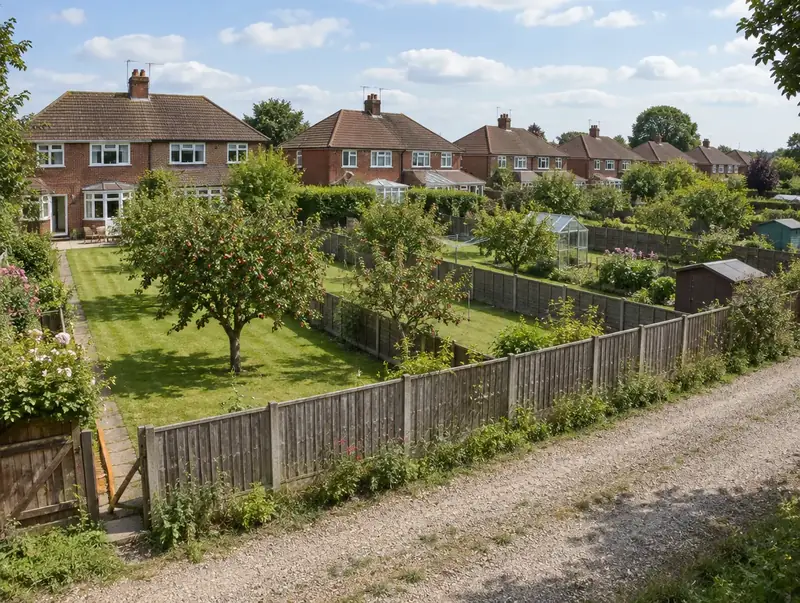
A backland plot is land behind existing buildings, usually large rear gardens, reached by a new or existing access. Garden land can sometimes take new homes, especially where several neighbours sell together or a lane runs along the back.
- Size
- 1 to 20 homes typically
- Planning
- Usually without
- Areas
- England & Wales
- Ways we buy
- Conditional or outright
Is your land in County Durham the kind we want?
County Durham here includes the Tees Valley towns of Darlington, Stockton-on-Tees and Hartlepool as well as Durham, Chester-le-Street, Consett, Bishop Auckland and the former coalfield villages. Green Belt protects land around Durham and between the Tyne and Wear conurbation and nearby towns, while the North Pennines National Landscape covers the west. Former colliery land, edge-of-village fields and older industrial sites are common sources of housing land.
- Long rear gardens backing onto a lane, road or track
- Several neighbouring gardens that could be combined
- Plots where the owner wants to keep their house
- Sites with or without previous applications
The East Coast Main Line and A1(M) run north to south through the area, linking Darlington and Durham with Newcastle. Much of the county is former coalfield, so mining risk checks are routine, and nutrient neutrality advice has applied in parts of the Tees catchment draining to Teesmouth.
Checks we make on garden and backland plots in County Durham
Local garden policy
Some councils resist garden development; others support it where character is respected.
Your own property
Selling garden land changes your home, so we plan boundaries and access carefully.
Mortgage consent
If your home is mortgaged, the lender will usually need to release the garden land.
National policy in England now recognises "medium development" of 10 to 49 homes on sites up to 2.5 hectares, and asks councils to allocate at least 10% of their housing on sites of one hectare or less and a further 10% on sites of one to 2.5 hectares.
In England, a planning permission normally has to be implemented within three years unless the council sets a different period, and councils aim to decide minor applications within eight weeks and major ones within thirteen.
Garden and backland plots wanted in towns across County Durham
Choosing how to sell
Subject-to-planning contract
The usual route: we apply and you only sell if permission is granted.
Subject-to-planning contractJoint venture
You contribute the land, we fund and manage planning and delivery, and the proceeds are shared as agreed.
Joint ventureFrom first call to completion
Tell us about the land
Use the form or call us with the location and a rough outline of the site.
Free appraisal
We review title, planning and constraints and tell you honestly what we think.
Written offer
If the site suits us, we set out an offer and the way we propose to buy.
Solicitors take over
Your solicitor and ours agree the contract; we keep you informed throughout.
Frequently asked in County Durham
Will selling part of my garden affect my house value?
It can, and the effect varies. We plan the boundary and access to protect your home, and you should take independent advice on the overall position.
My neighbours might sell too. Does that help?
Often, yes. Combining gardens can create a better site and access. We can talk to each owner and keep the arrangement fair.
Can an agent introduce land in County Durham to you?
Yes. Estate agents, land agents and planning consultants can introduce sites with the owner's consent. Any fee is agreed in writing before details are shared, confirmed by the owner in writing and paid only on completion.
How quickly can you look at a site in County Durham?
For most sites we can give an initial view once we have the location and a plan. Detailed checks follow if the land looks suitable.