
Brownfield land wanted in Cornwall
If you own brownfield land in or around Cornwall, we would like to hear about it. We buy directly and give a free, no-obligation appraisal.
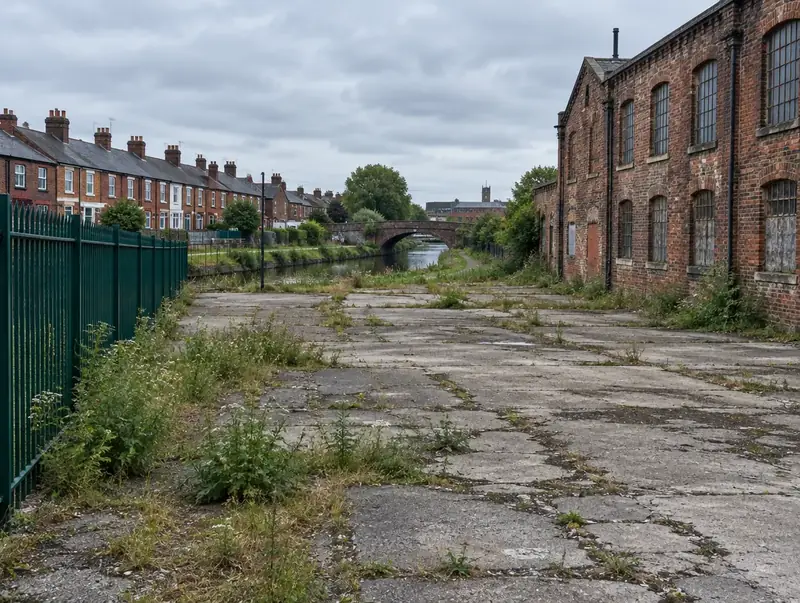
A brownfield site is previously developed land, usually in or near a town. Old use can mean contamination, demolition or difficult ground, but these are often solvable. We look at the history, the ground and the planning position before making an offer.
- Size
- Any
- Planning
- With or without
- Areas
- England & Wales
- Ways we buy
- Outright or conditional
The brownfield land that interests us around Cornwall
Cornwall has no Green Belt, but landscape designation is extensive: the Cornwall National Landscape covers large stretches of coast and countryside, alongside the Tamar Valley and Isles of Scilly National Landscapes. Settlements are dispersed, from Truro, Camborne, Redruth and St Austell to many small coastal and inland villages. Sites coming forward are often edge-of-settlement fields, farm buildings, former mining and china clay land, and rural exception sites for local needs.
- Cleared sites and land with hardstanding
- Yards and builders' compounds within towns
- Sites on a brownfield land register (England) or similar
- Land with buildings that would be demolished
Second-home and holiday-let pressure has led to principal residence policies in some Cornish neighbourhood plans, and nutrient neutrality advice has applied in the River Camel catchment. Former mining land around Camborne and Redruth needs mining risk checks, while the A30 corridor towns attract more mainstream housing growth.
Checks we make on brownfield land in Cornwall
Contamination
Past uses can leave contamination; desk studies and site investigation show what remediation is needed.
Demolition and ground
Old foundations, tanks and services add cost, so we allow for them in our appraisal.
Existing floorspace
Vacant buildings can reduce affordable housing requirements in some cases (vacant building credit, England).
The August 2026 NPPF supports homes within reasonable walking distance (around 800 metres) of well-connected railway stations, with minimum densities of 35 homes per hectare, or 45 near higher-frequency stations.
The Planning and Infrastructure Act 2025 introduced Environmental Delivery Plans and a Nature Restoration Levy in England, which over time may offer an alternative to site-by-site mitigation for some environmental issues.
Cornwall has no designated Green Belt, so the main policy questions near Cornwall are usually the settlement boundary, landscape and access.
Choosing how to sell
Outright purchase
Common for brownfield, with contamination and demolition allowed for in the price.
Outright purchaseSubject-to-planning contract
Useful where the change from commercial to residential still needs consent.
Subject-to-planning contractFrom first call to completion
Tell us about the land
Use the form or call us with the location and a rough outline of the site.
Free appraisal
We review title, planning and constraints and tell you honestly what we think.
Written offer
If the site suits us, we set out an offer and the way we propose to buy.
Solicitors take over
Your solicitor and ours agree the contract; we keep you informed throughout.
Questions owners in Cornwall ask
Do I have to clear the site first?
No. We can buy with buildings and hardstanding in place and deal with demolition ourselves.
Is brownfield land easier to get planning on?
National policy in England and Wales supports making good use of previously developed land, but each site still needs to meet local policies.
Can an agent introduce land in Cornwall to you?
Yes. Estate agents, land agents and planning consultants can introduce sites with the owner's consent. Any fee is agreed in writing before details are shared, confirmed by the owner in writing and paid only on completion.
How quickly can you look at a site in Cornwall?
For most sites we can give an initial view once we have the location and a plan. Detailed checks follow if the land looks suitable.