
Brownfield land wanted in Bristol
We want to hear from owners of brownfield land in Bristol. There is nothing to pay us, and you are under no obligation.
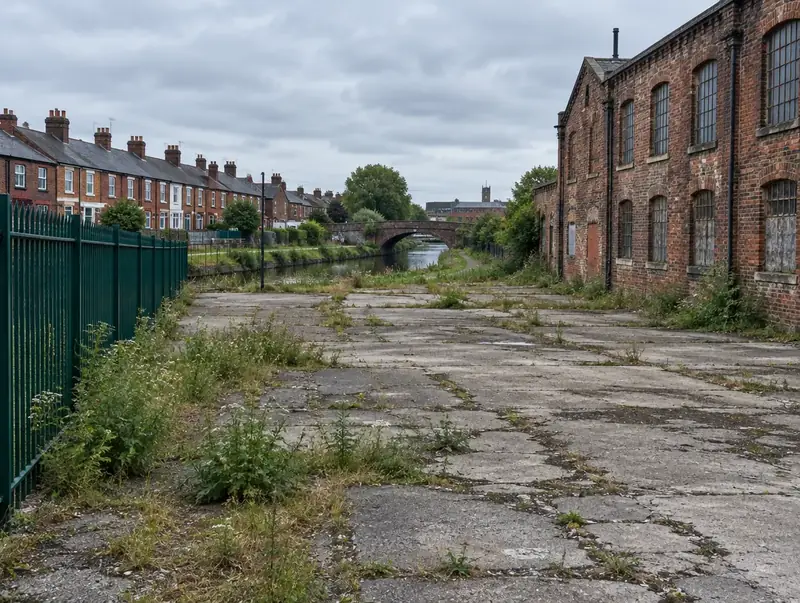
A brownfield site is previously developed land, usually in or near a town. Old use can mean contamination, demolition or difficult ground, but these are often solvable. We look at the history, the ground and the planning position before making an offer.
- Size
- Any
- Planning
- With or without
- Areas
- England & Wales
- Ways we buy
- Outright or conditional
What brownfield land we want near Bristol
Bristol is a compact city bounded by the Avon Gorge, the Severn estuary at Avonmouth and the Bristol and Bath Green Belt, which covers land on and beyond its edges. Most new homes come from previously developed land: former industrial and commercial sites, yards, garage courts and regeneration areas such as Temple Quarter and the harbourside. Small infill and backland plots across the suburbs are also a steady source of sites.
- Former industrial, commercial or depot sites
- Cleared sites and land with hardstanding
- Yards and builders' compounds within towns
- Sites on a brownfield land register (England) or similar
Higher densities are encouraged around stations and the city centre, with Temple Meads and the MetroWest rail upgrades a focus for growth. Flood risk from the tidal Avon and the Severn estuary affects central and Avonmouth sites, and conservation areas cover much of the historic city.
Before we make an offer in Bristol
Demolition and ground
Old foundations, tanks and services add cost, so we allow for them in our appraisal.
Employment land policy
Some councils protect employment land; we check whether a change to housing would be resisted.
Existing floorspace
Vacant buildings can reduce affordable housing requirements in some cases (vacant building credit, England).
Where an English council cannot show a five-year supply of housing land, or its Housing Delivery Test result falls below 75%, the August 2026 NPPF can give policy support to suitable housing outside settlement boundaries.
Since 6 August 2026, non-major development on sites of 0.2 hectares or less in England has generally been exempt from mandatory biodiversity net gain, unless priority habitat is affected. That makes many small sites simpler to bring forward.
Choosing how to sell
Outright purchase
Common for brownfield, with contamination and demolition allowed for in the price.
Outright purchaseSubject-to-planning contract
We agree a price now and complete once a satisfactory planning permission is granted.
Subject-to-planning contractWhat happens after you get in touch
Get in touch
Tell us where the land is and what you know about it.
Site review
We look at the land, its planning position and anything that could affect it.
Proposal
We put our proposal in writing, with no obligation to accept.
Exchange and completion
If you go ahead, contracts are exchanged and the sale completes on the agreed terms.
Brownfield land in Bristol: common questions
Is brownfield land easier to get planning on?
National policy in England and Wales supports making good use of previously developed land, but each site still needs to meet local policies.
My site is still let to a tenant. Is that a problem?
It can be managed. Tell us about the lease terms and any break dates and we will factor them into the timing.
How quickly can you look at a site in Bristol?
For most sites we can give an initial view once we have the location and a plan. Detailed checks follow if the land looks suitable.
Which planning rules apply to land in Bristol?
As Bristol is in England, national policy comes from the National Planning Policy Framework, revised in August 2026. Local policies in the council's development plan also apply.