
Brownfield land wanted in Lincolnshire
If you own brownfield land in or around Lincolnshire, we would like to hear about it. We buy directly and give a free, no-obligation appraisal.
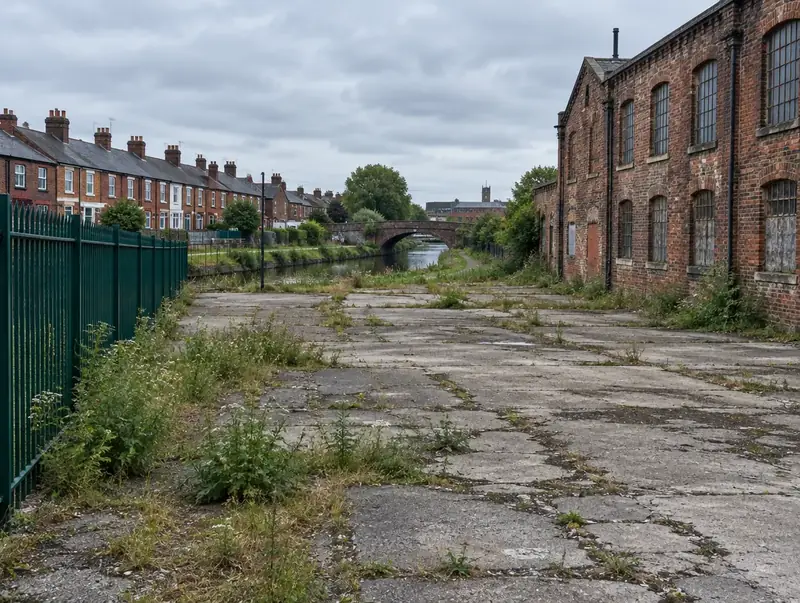
If your land has buildings, hardstanding or a past industrial use, it is likely to count as brownfield. Reusing these sites is a planning priority, and we are buyers for yards, depots and cleared plots across England and Wales.
- Size
- Any
- Planning
- With or without
- Areas
- England & Wales
- Ways we buy
- Outright or conditional
Brownfield land we are looking for in Lincolnshire
Lincolnshire, as used here, includes the Humber towns of Grimsby, Scunthorpe and Cleethorpes as well as Lincoln, Boston, Grantham, Spalding, Stamford and Skegness. There is no Green Belt, but the Lincolnshire Wolds National Landscape covers part of the county and much of the south and east lies in low-lying fenland and coastal marsh at high flood risk. Typical sites include edge-of-town fields, farm buildings, village infill and former industrial land.
- Former industrial, commercial or depot sites
- Sites on a brownfield land register (England) or similar
- Land with buildings that would be demolished
- Sites with known contamination where the history is documented
Flood zones and the sequential test often decide what is possible in the Fens and along the coast, so sites on higher ground or within existing towns are favoured. The A1 corridor at Grantham and Stamford, the Lincoln area and the Humber ports see the most interest in larger housing land.
What decides whether a site in Lincolnshire works
Neighbouring uses
Noise or smells from neighbouring businesses can affect whether homes are acceptable.
Employment land policy
Some councils protect employment land; we check whether a change to housing would be resisted.
Existing floorspace
Vacant buildings can reduce affordable housing requirements in some cases (vacant building credit, England).
In England, the revised National Planning Policy Framework published on 17 August 2026 replaced the old "tilted balance" with new settlement policies: development within a settlement should normally be approved unless the harm substantially outweighs the benefits, while land outside a settlement can gain support in defined circumstances.
In England, a planning permission normally has to be implemented within three years unless the council sets a different period, and councils aim to decide minor applications within eight weeks and major ones within thirteen.
Brownfield land wanted in towns across Lincolnshire
Ways to sell brownfield land in Lincolnshire
Outright purchase
Common for brownfield, with contamination and demolition allowed for in the price.
Outright purchaseSubject-to-planning contract
Useful where the change from commercial to residential still needs consent.
Subject-to-planning contractHow a sale to us works
Get in touch
Tell us where the land is and what you know about it.
Site review
We look at the land, its planning position and anything that could affect it.
Proposal
We put our proposal in writing, with no obligation to accept.
Exchange and completion
If you go ahead, contracts are exchanged and the sale completes on the agreed terms.
Frequently asked in Lincolnshire
Do I have to clear the site first?
No. We can buy with buildings and hardstanding in place and deal with demolition ourselves.
Is brownfield land easier to get planning on?
National policy in England and Wales supports making good use of previously developed land, but each site still needs to meet local policies.
Do you buy brownfield land in Lincolnshire?
Yes. We buy brownfield land in Lincolnshire and throughout Lincolnshire, as well as elsewhere in England and Wales. Tell us where the land is and we will give you a free appraisal.
Which planning rules apply to land in Lincolnshire?
As Lincolnshire is in England, national policy comes from the National Planning Policy Framework, revised in August 2026. Local policies in the council's development plan also apply.