
Redundant buildings wanted in Spalding
We want to hear from owners of redundant buildings in Spalding. There is nothing to pay us, and you are under no obligation.
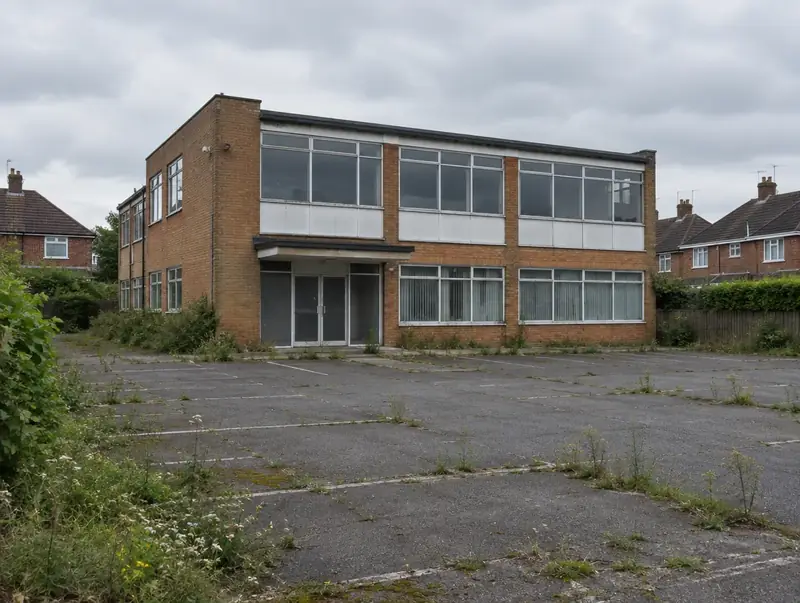
Redundant buildings are empty or underused buildings, such as offices, shops, pubs, chapels or halls, that could be converted or replaced with homes. We assess both conversion and redevelopment and buy suitable buildings across England and Wales.
- Size
- Any
- Planning
- With or without
- Areas
- England & Wales
- Ways we buy
- Outright or conditional
Redundant buildings we are looking for in Spalding
Redundant buildings in Spalding often sit in the heart of things, close to shops and transport, which can make them strong residential sites. Spalding lies about 34 miles south-east of Lincoln in Lincolnshire. We also cover Boston, Peterborough, Wisbech and the villages between them.
- Vacant offices and commercial buildings
- Former pubs, halls, chapels and churches
- Buildings with or without existing consent
- Sites where demolition and rebuilding may be better than conversion
Lincolnshire, as used here, includes the Humber towns of Grimsby, Scunthorpe and Cleethorpes as well as Lincoln, Boston, Grantham, Spalding, Stamford and Skegness. There is no Green Belt, but the Lincolnshire Wolds National Landscape covers part of the county and much of the south and east lies in low-lying fenland and coastal marsh at high flood risk. Typical sites include edge-of-town fields, farm buildings, village infill and former industrial land.
What decides whether a site in Spalding works
Community value
Pubs and community buildings may be listed as assets of community value or protected by policy.
Heritage
Listed buildings and conservation areas need careful design and extra consents.
Building condition
Structure, layout and light decide whether conversion makes sense.
In England, the revised National Planning Policy Framework published on 17 August 2026 replaced the old "tilted balance" with new settlement policies: development within a settlement should normally be approved unless the harm substantially outweighs the benefits, while land outside a settlement can gain support in defined circumstances.
Lincolnshire has no designated Green Belt, so the main policy questions near Spalding are usually the settlement boundary, landscape and access.
We are based in Great Barr, Birmingham, around 75 miles from Spalding, and we travel to see sites across England and Wales.
Ways to sell redundant buildings in Spalding
Outright purchase
Common for empty buildings, with conversion costs reflected in the price.
Outright purchaseSubject-to-planning contract
Used where consent or prior approval is still needed.
Subject-to-planning contractFrom first call to completion
Get in touch
Tell us where the land is and what you know about it.
Site review
We look at the land, its planning position and anything that could affect it.
Proposal
We put our proposal in writing, with no obligation to accept.
Exchange and completion
If you go ahead, contracts are exchanged and the sale completes on the agreed terms.
Questions owners in Spalding ask
My building is listed. Is that a problem?
Not necessarily, but it means listed building consent as well as planning permission, and design must respect the building's significance.
Do you buy buildings that need demolition?
Yes, where redevelopment is the better option and the planning position supports it.
Can an agent introduce land in Spalding to you?
Yes. Estate agents, land agents and planning consultants can introduce sites with the owner's consent. Any fee is agreed in writing before details are shared, confirmed by the owner in writing and paid only on completion.
Do I need to pay anything to have land in Spalding assessed?
No. Our appraisal is free and there is no obligation to sell to us.