
Garden and backland plots wanted in Spalding
Looking to sell garden and backland plots near Spalding? We assess every site on its merits and explain the options in plain English.
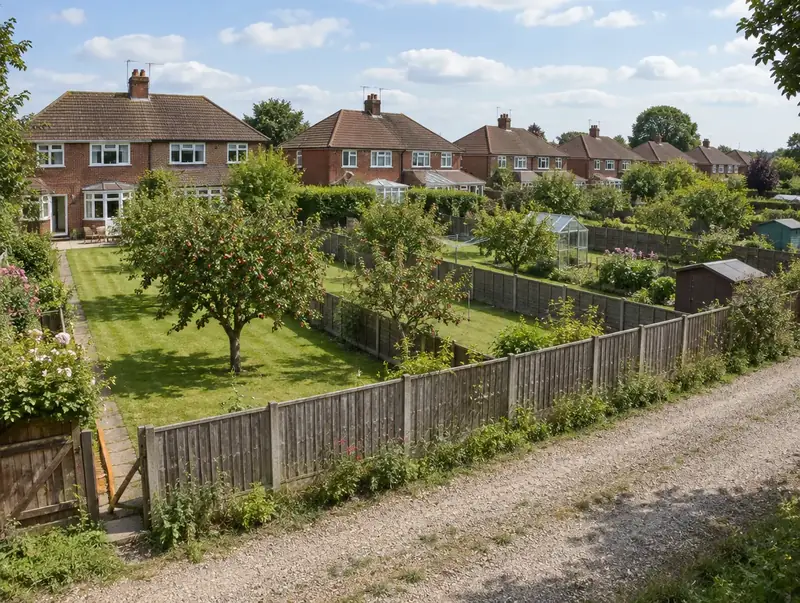
A backland plot is land behind existing buildings, usually large rear gardens, reached by a new or existing access. Garden land can sometimes take new homes, especially where several neighbours sell together or a lane runs along the back.
- Size
- 1 to 20 homes typically
- Planning
- Usually without
- Areas
- England & Wales
- Ways we buy
- Conditional or outright
Is your land in Spalding the kind we want?
Backland development in Spalding turns on access and privacy; we look at both before suggesting whether an application is worth making. In Lincolnshire, Spalding sits about 34 miles south-east of Lincoln; Boston and Peterborough are its nearest neighbours on our list.
- Several neighbouring gardens that could be combined
- Land behind houses with an existing drive or gap for access
- Paddocks and orchards behind homes on the edge of a village
- Sites with or without previous applications
Flood zones and the sequential test often decide what is possible in the Fens and along the coast, so sites on higher ground or within existing towns are favoured. The A1 corridor at Grantham and Stamford, the Lincoln area and the Humber ports see the most interest in larger housing land.
What usually makes or breaks it
Access width
The drive or road into the plot must be safe for cars, bins and emergency vehicles.
Overlooking
New homes must sit far enough from existing homes to protect privacy.
Local garden policy
Some councils resist garden development; others support it where character is respected.
National policy in England now recognises "medium development" of 10 to 49 homes on sites up to 2.5 hectares, and asks councils to allocate at least 10% of their housing on sites of one hectare or less and a further 10% on sites of one to 2.5 hectares.
Lincolnshire has no designated Green Belt, so the main policy questions near Spalding are usually the settlement boundary, landscape and access.
Though we are based in Birmingham (roughly 75 miles away), distance is no barrier: we look at land across England and Wales.
Choosing how to sell
Subject-to-planning contract
The usual route: we apply and you only sell if permission is granted.
Subject-to-planning contractWhat happens after you get in touch
Get in touch
Tell us where the land is and what you know about it.
Site review
We look at the land, its planning position and anything that could affect it.
Proposal
We put our proposal in writing, with no obligation to accept.
Exchange and completion
If you go ahead, contracts are exchanged and the sale completes on the agreed terms.
Frequently asked in Lincolnshire
Do I pay tax on selling garden land?
Tax depends on your circumstances, including how much land you have and how it has been used. Speak to a tax adviser before you agree terms.
My neighbours might sell too. Does that help?
Often, yes. Combining gardens can create a better site and access. We can talk to each owner and keep the arrangement fair.
How quickly can you look at a site in Spalding?
For most sites we can give an initial view once we have the location and a plan. Detailed checks follow if the land looks suitable.
Which planning rules apply to land in Spalding?
As Spalding is in England, national policy comes from the National Planning Policy Framework, revised in August 2026. Local policies in the council's development plan also apply.