
Garden and backland plots wanted in Kent
If you own garden and backland plots in or around Kent, we would like to hear about it. We buy directly and give a free, no-obligation appraisal.
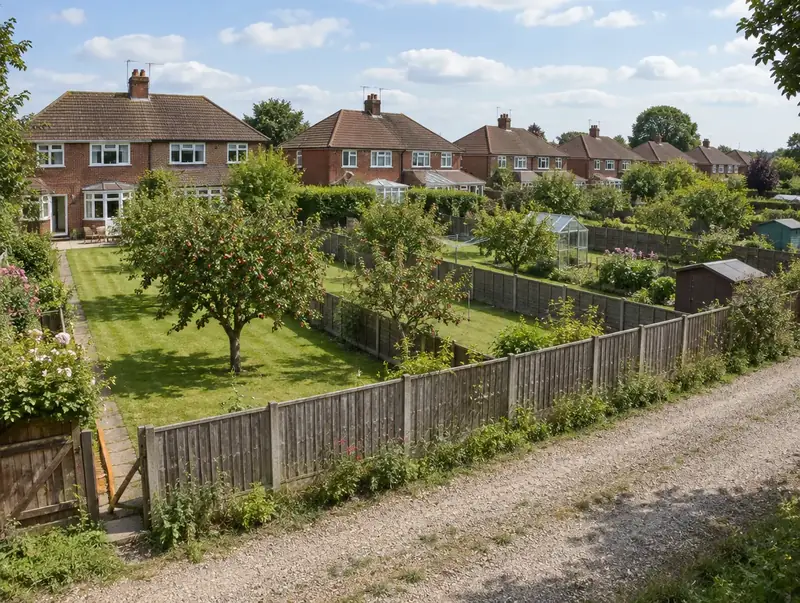
A backland plot is land behind existing buildings, usually large rear gardens, reached by a new or existing access. Garden land can sometimes take new homes, especially where several neighbours sell together or a lane runs along the back.
- Size
- 1 to 20 homes typically
- Planning
- Usually without
- Areas
- England & Wales
- Ways we buy
- Conditional or outright
What garden and backland plots we want near Kent
Kent ranges from the Medway towns, Dartford and Gravesend on the Thames to Maidstone, Ashford, Canterbury, Tunbridge Wells and the coastal towns of Margate, Ramsgate, Folkestone and Dover. West Kent is largely Metropolitan Green Belt, while the Kent Downs and High Weald National Landscapes cover much of the countryside. Sites typically include edge-of-town fields, orchards and farmland, farm buildings, infill plots and brownfield land in the towns.
- Long rear gardens backing onto a lane, road or track
- Several neighbouring gardens that could be combined
- Land behind houses with an existing drive or gap for access
- Sites with or without previous applications
Nutrient neutrality advice has affected the Stour catchment around Canterbury and Ashford because of the protected Stodmarsh wetlands. High Speed 1 stations and the M2, M20 and A2 corridors are a focus for growth, while coastal flood risk matters on the Thames and Swale estuaries and Romney Marsh.
What usually makes or breaks it
Access width
The drive or road into the plot must be safe for cars, bins and emergency vehicles.
Overlooking
New homes must sit far enough from existing homes to protect privacy.
Local garden policy
Some councils resist garden development; others support it where character is respected.
In England, the revised National Planning Policy Framework published on 17 August 2026 replaced the old "tilted balance" with new settlement policies: development within a settlement should normally be approved unless the harm substantially outweighs the benefits, while land outside a settlement can gain support in defined circumstances.
In England, a planning permission normally has to be implemented within three years unless the council sets a different period, and councils aim to decide minor applications within eight weeks and major ones within thirteen.
Some land in Kent is designated Green Belt. If your land is within it, it may still qualify as grey belt or previously developed land under national policy, subject to the Golden Rules.
How we could buy your land in Kent
Subject-to-planning contract
The usual route: we apply and you only sell if permission is granted.
Subject-to-planning contractFrom first call to completion
Tell us about the land
Use the form or call us with the location and a rough outline of the site.
Free appraisal
We review title, planning and constraints and tell you honestly what we think.
Written offer
If the site suits us, we set out an offer and the way we propose to buy.
Solicitors take over
Your solicitor and ours agree the contract; we keep you informed throughout.
Garden and backland plots in Kent: common questions
Will selling part of my garden affect my house value?
It can, and the effect varies. We plan the boundary and access to protect your home, and you should take independent advice on the overall position.
Do I pay tax on selling garden land?
Tax depends on your circumstances, including how much land you have and how it has been used. Speak to a tax adviser before you agree terms.
Can an agent introduce land in Kent to you?
Yes. Estate agents, land agents and planning consultants can introduce sites with the owner's consent. Any fee is agreed in writing before details are shared, confirmed by the owner in writing and paid only on completion.
How quickly can you look at a site in Kent?
For most sites we can give an initial view once we have the location and a plan. Detailed checks follow if the land looks suitable.