
Barns and rural buildings wanted in Folkestone
We want to hear from owners of barns and rural buildings in Folkestone. There is nothing to pay us, and you are under no obligation.
Barns and rural buildings can sometimes become homes through conversion or, in some cases, replacement. In England, Class Q permitted development allows certain agricultural buildings to change to residential use; in Wales the route is through a planning application. We buy suitable buildings in both nations.
- Size
- Single barns to farmyards
- Planning
- With or without
- Areas
- England & Wales
- Ways we buy
- Outright or conditional
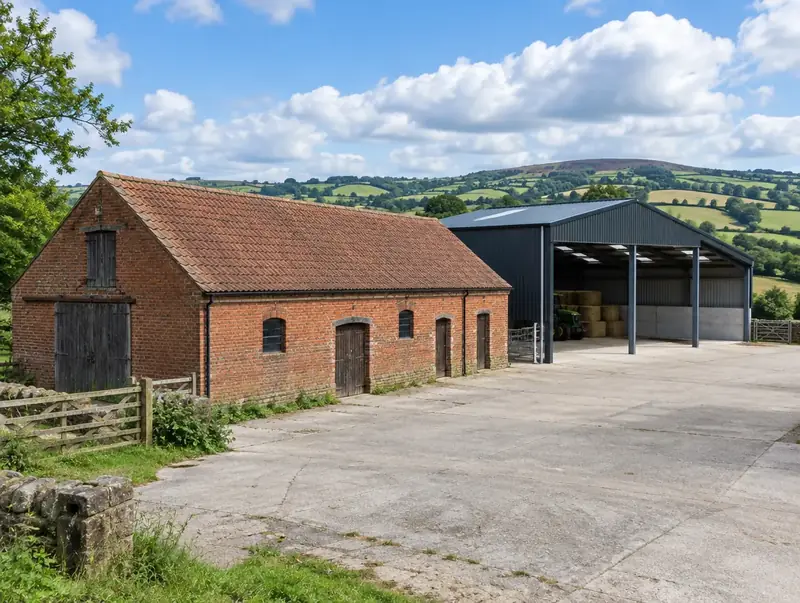
What barns and rural buildings we want near Folkestone
Farm buildings near Folkestone that have fallen out of use may suit conversion, particularly traditional barns with a good access. Folkestone is in Kent, about 31 miles south-east of Maidstone. Nearby places include Dover, Ashford and Deal.
- Traditional brick or stone barns
- Modern agricultural buildings that may suit Class Q (England)
- Stable blocks, workshops and rural yards
- Buildings with or without an existing consent
Nutrient neutrality advice has affected the Stour catchment around Canterbury and Ashford because of the protected Stodmarsh wetlands. High Speed 1 stations and the M2, M20 and A2 corridors are a focus for growth, while coastal flood risk matters on the Thames and Swale estuaries and Romney Marsh.
Checks we make on barns and rural buildings in Folkestone
Structure
Conversion routes usually require the building to be capable of conversion without substantial rebuilding.
Protected species
Bats and barn owls are common in rural buildings and need surveys at the right time of year.
Access and services
Rural buildings often need new access, drainage and power.
National policy in England now recognises "medium development" of 10 to 49 homes on sites up to 2.5 hectares, and asks councils to allocate at least 10% of their housing on sites of one hectare or less and a further 10% on sites of one to 2.5 hectares.
Some land in Kent is designated Green Belt. If your land is within it, it may still qualify as grey belt or previously developed land under national policy, subject to the Golden Rules.
Though we are based in Birmingham (roughly 166 miles away), distance is no barrier: we look at land across England and Wales.
Four ways to sell to us
Outright purchase
We agree a price and buy the land, with no planning condition attached.
Outright purchaseSubject-to-planning contract
Common: we seek consent or prior approval and complete if successful.
Subject-to-planning contractOption agreement
You grant us the right to buy within a set period, usually for an option premium, while we pursue planning.
Option agreementWhat happens after you get in touch
Send the basics
A postcode or plan and a few lines about the land are enough to start.
We do the homework
We check planning history, policy, flood maps and access at no cost to you.
We explain the options
You get a written proposal covering price, structure and timing.
Agree and proceed
Once you are happy, solicitors are instructed and the deal moves forward.
Barns and rural buildings in Folkestone: common questions
We still use some of the buildings. Can we sell just part of the yard?
Yes. We can look at selling some buildings and keeping others, with access and boundaries agreed.
Do bats stop a barn conversion?
Not usually, but surveys and mitigation are needed, and survey seasons can affect timing.
How quickly can you look at a site in Folkestone?
For most sites we can give an initial view once we have the location and a plan. Detailed checks follow if the land looks suitable.
Which planning rules apply to land in Folkestone?
As Folkestone is in England, national policy comes from the National Planning Policy Framework, revised in August 2026. Local policies in the council's development plan also apply.