
Residential development land wanted in Thatcham
We want to hear from owners of residential development land in Thatcham. There is nothing to pay us, and you are under no obligation.
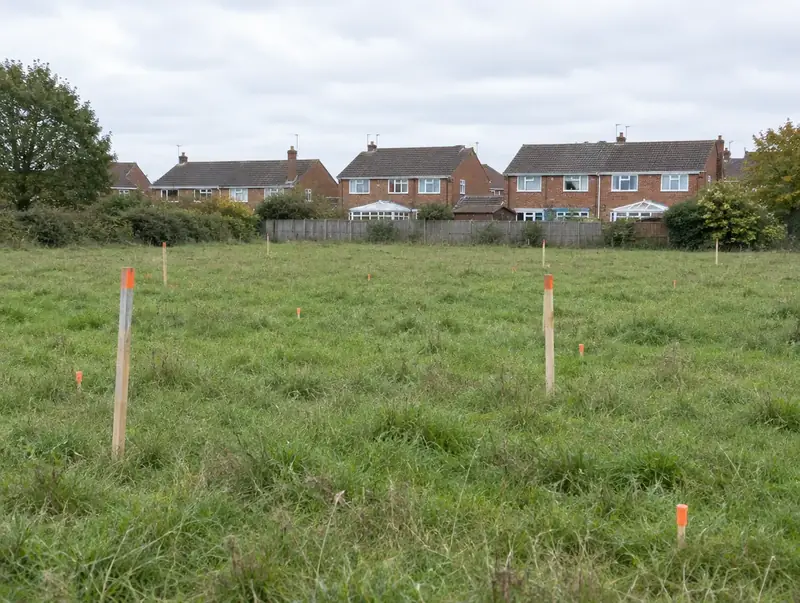
If a piece of land could hold new houses or flats, it counts as residential development land. That might be a paddock on the edge of a village, a yard in a town, or a field next to an existing estate. We assess each one on its own merits and say plainly what we think.
- Size
- Any — single plots to 50+ homes
- Planning
- With or without
- Areas
- England & Wales
- Ways we buy
- All four
Residential development land we are looking for in Thatcham
Sites on the edge of Thatcham or the villages nearby can be worth a conversation, especially where they are well connected by road and bus or rail. Thatcham is in Berkshire, about 13 miles west of Reading. Nearby places include Newbury, Tadley and Basingstoke.
- Land next to or within an existing town, village or suburb
- Land outside the highest flood risk zones, or where flood risk only affects part of the site
- Sites with or without planning permission, including land promoted in a local plan
- Freehold land where the owner (or all the owners) can sell
Berkshire is a string of large towns along the Thames Valley, including Reading, Slough, Bracknell, Maidenhead and Wokingham, with Newbury and smaller villages to the west. The east of the county is heavily constrained by the Metropolitan Green Belt, while the west falls partly within the North Wessex Downs National Landscape. Sites that come forward are often brownfield and town-centre land, edge-of-settlement fields and possible grey belt on the Green Belt fringe.
What usually makes or breaks it
Settlement boundary
Land inside or touching a defined settlement usually has a clearer policy route than isolated land.
Development plan position
Whether the council has an up-to-date plan shapes how applications are judged; in England, housing land supply also matters.
Utilities and drainage
Foul and surface water drainage, and power capacity, affect cost and timing more than most owners expect.
The August 2026 NPPF supports homes within reasonable walking distance (around 800 metres) of well-connected railway stations, with minimum densities of 35 homes per hectare, or 45 near higher-frequency stations.
Parts of Berkshire are Green Belt, though not every town has any nearby. We check early whether a site is inside it and, if so, whether a grey belt or previously developed land case could apply.
Our base is in Great Barr, Birmingham, about 84 miles away, and we buy land throughout England and Wales.
Four ways to sell to us
Outright purchase
Best where planning is already granted or the route to it is clear.
Outright purchaseSubject-to-planning contract
Common for land without planning: we agree a price now and complete once a suitable permission is granted.
Subject-to-planning contractOption agreement
You grant us the right to buy within a set period, usually for an option premium, while we pursue planning.
Option agreementHow a sale to us works
Send the basics
A postcode or plan and a few lines about the land are enough to start.
We do the homework
We check planning history, policy, flood maps and access at no cost to you.
We explain the options
You get a written proposal covering price, structure and timing.
Agree and proceed
Once you are happy, solicitors are instructed and the deal moves forward.
Frequently asked in Berkshire
Can I sell part of my land and keep the rest?
Often, yes. We can look at selling an agreed area, with access and boundaries set out so the land you keep is not left landlocked.
Will you tell me if you think the land is not suitable?
Yes. If we think the site has no realistic route to homes we will say so and, where we can, explain why.
Do you buy residential development land in Thatcham?
Yes. We buy residential development land in Thatcham and throughout Berkshire, as well as elsewhere in England and Wales. Tell us where the land is and we will give you a free appraisal.
Which planning rules apply to land in Thatcham?
As Thatcham is in England, national policy comes from the National Planning Policy Framework, revised in August 2026. Local policies in the council's development plan also apply.