
Green Belt and grey belt land wanted in West Sussex
Looking to sell Green Belt and grey belt land near West Sussex? We assess every site on its merits and explain the options in plain English.
Grey belt is land within England's Green Belt that does not strongly contribute to certain Green Belt purposes. The revised NPPF of August 2026 kept grey belt and the Golden Rules, so some Green Belt land, especially previously developed or poorly performing land, may now have a route to homes.
- Size
- Any
- Planning
- Usually without
- Areas
- England only
- Ways we buy
- Option or conditional
What Green Belt and grey belt land we want near West Sussex
West Sussex includes Crawley, Horsham, Haywards Heath, Burgess Hill, East Grinstead and Chichester and the coastal towns of Worthing, Bognor Regis, Littlehampton, Shoreham-by-Sea and Lancing. It has only a very small area of Green Belt on the Surrey border, but the South Downs National Park and the High Weald and Chichester Harbour National Landscapes cover large parts. Typical sites include edge-of-town fields, farm buildings, infill plots and urban brownfield land.
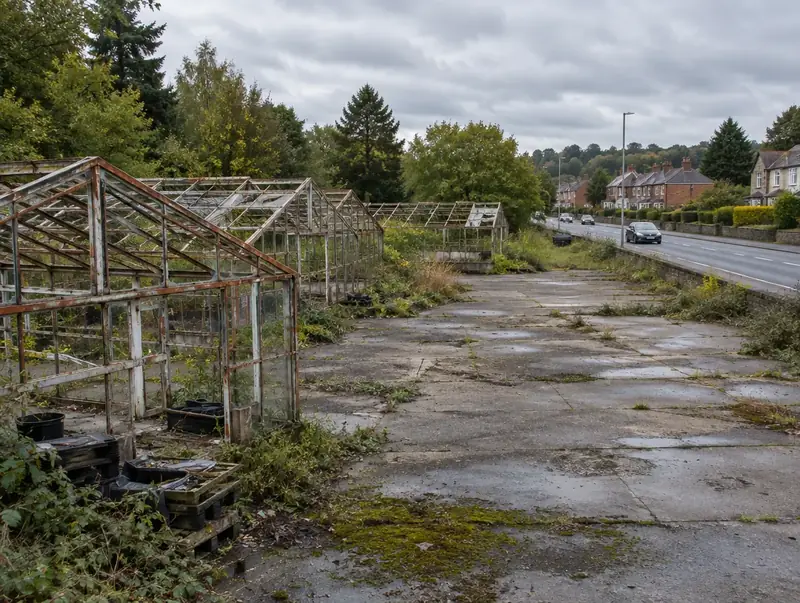
- Previously developed land in the Green Belt, such as yards, nurseries or old buildings
- Land the council has identified in a Green Belt review
- Sites with a defensible boundary such as a road or railway
- Land with or without earlier promotion
Water neutrality advice that held up many schemes around Crawley, Horsham and Chichester was withdrawn from 1 November 2025, though water efficiency remains important. Chichester Harbour and the coastal plain bring flood risk and mitigation considerations, while the Brighton Main Line and A23 corridor focus growth around Crawley and Burgess Hill.
Checks we make on Green Belt and grey belt land in West Sussex
Green Belt purposes
Whether land strongly contributes to purposes (a), (b) or (d) decides if it can be grey belt.
Local plan reviews
Councils may release Green Belt through their plans; promotion can matter.
Protected areas
Other designations, such as protected landscapes, still apply.
Since 6 August 2026, non-major development on sites of 0.2 hectares or less in England has generally been exempt from mandatory biodiversity net gain, unless priority habitat is affected. That makes many small sites simpler to bring forward.
In England, a planning permission normally has to be implemented within three years unless the council sets a different period, and councils aim to decide minor applications within eight weeks and major ones within thirteen.
Parts of West Sussex are Green Belt, though not every town has any nearby. We check early whether a site is inside it and, if so, whether a grey belt or previously developed land case could apply.
Ways to sell Green Belt and grey belt land in West Sussex
Subject-to-planning contract
Works for smaller previously developed Green Belt sites.
Subject-to-planning contractWhat happens after you get in touch
Get in touch
Tell us where the land is and what you know about it.
Site review
We look at the land, its planning position and anything that could affect it.
Proposal
We put our proposal in writing, with no obligation to accept.
Exchange and completion
If you go ahead, contracts are exchanged and the sale completes on the agreed terms.
Frequently asked in West Sussex
Is grey belt still part of national policy?
Yes. The revised NPPF published on 17 August 2026 retains grey belt, with a simplified definition and new guidance on Green Belt assessments in Annex E.
Is previously developed Green Belt land treated differently?
Yes. Redeveloping previously developed land in the Green Belt can be appropriate in some circumstances; we check how national and local policy apply to your site.
Can an agent introduce land in West Sussex to you?
Yes. Estate agents, land agents and planning consultants can introduce sites with the owner's consent. Any fee is agreed in writing before details are shared, confirmed by the owner in writing and paid only on completion.
Which planning rules apply to land in West Sussex?
As West Sussex is in England, national policy comes from the National Planning Policy Framework, revised in August 2026. Local policies in the council's development plan also apply.