
Garden and backland plots wanted in Hampshire
If you own garden and backland plots in or around Hampshire, we would like to hear about it. We buy directly and give a free, no-obligation appraisal.
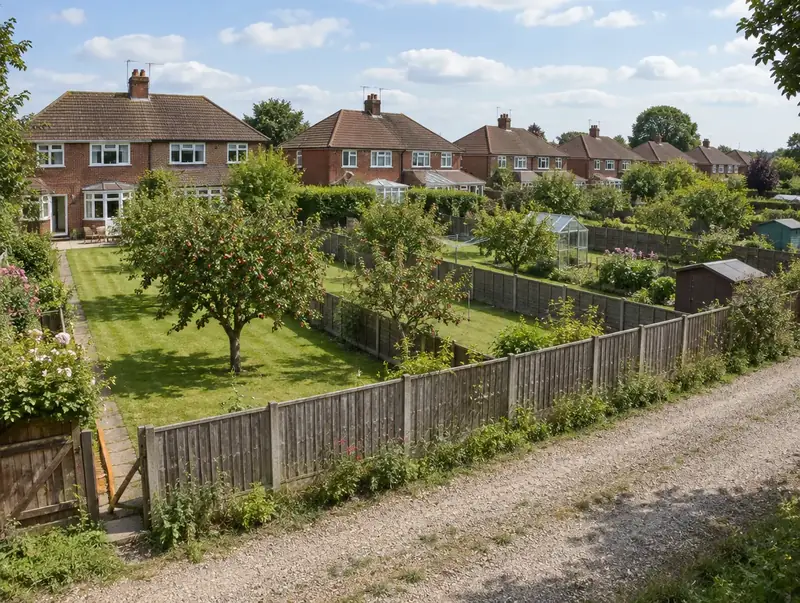
Garden and backland development means building new homes on land behind existing houses. It works best where there is a safe access and enough space to avoid overlooking. We buy single large gardens and assemble neighbouring gardens where owners agree.
- Size
- 1 to 20 homes typically
- Planning
- Usually without
- Areas
- England & Wales
- Ways we buy
- Conditional or outright
Garden and backland plots we are looking for in Hampshire
Hampshire includes the cities of Southampton, Portsmouth and Winchester, the north Hampshire towns of Basingstoke, Farnborough, Aldershot and Fleet, and a large rural area. The New Forest and South Downs National Parks, several National Landscapes and Green Belt on the Dorset border in the south-west all constrain land. Typical sites include edge-of-town fields, farm buildings, infill plots and urban brownfield land.
- Several neighbouring gardens that could be combined
- Land behind houses with an existing drive or gap for access
- Paddocks and orchards behind homes on the edge of a village
- Plots where the owner wants to keep their house
Nutrient neutrality advice has applied across much of south Hampshire because of the Solent's protected habitats, and coastal schemes contribute to recreation mitigation for overwintering birds. The M3 and M27 corridors carry most planned growth, with smaller sites in market towns such as Alton, Andover and Romsey.
What decides whether a site in Hampshire works
Overlooking
New homes must sit far enough from existing homes to protect privacy.
Local garden policy
Some councils resist garden development; others support it where character is respected.
Mortgage consent
If your home is mortgaged, the lender will usually need to release the garden land.
The August 2026 NPPF supports homes within reasonable walking distance (around 800 metres) of well-connected railway stations, with minimum densities of 35 homes per hectare, or 45 near higher-frequency stations.
English councils keep brownfield land registers, and some previously developed sites can be granted permission in principle, a quicker way of establishing whether housing is acceptable before technical details are settled.
Garden and backland plots wanted in towns across Hampshire
Four ways to sell to us
Outright purchase
We agree a price and buy the land, with no planning condition attached.
Outright purchaseSubject-to-planning contract
The usual route: we apply and you only sell if permission is granted.
Subject-to-planning contractJoint venture
You contribute the land, we fund and manage planning and delivery, and the proceeds are shared as agreed.
Joint ventureThe next steps
Get in touch
Tell us where the land is and what you know about it.
Site review
We look at the land, its planning position and anything that could affect it.
Proposal
We put our proposal in writing, with no obligation to accept.
Exchange and completion
If you go ahead, contracts are exchanged and the sale completes on the agreed terms.
Garden and backland plots in Hampshire: common questions
Will selling part of my garden affect my house value?
It can, and the effect varies. We plan the boundary and access to protect your home, and you should take independent advice on the overall position.
Do I pay tax on selling garden land?
Tax depends on your circumstances, including how much land you have and how it has been used. Speak to a tax adviser before you agree terms.
Do you buy garden and backland plots in Hampshire?
Yes. We buy garden and backland plots in Hampshire and throughout Hampshire, as well as elsewhere in England and Wales. Tell us where the land is and we will give you a free appraisal.
Which planning rules apply to land in Hampshire?
As Hampshire is in England, national policy comes from the National Planning Policy Framework, revised in August 2026. Local policies in the council's development plan also apply.