
Garden and backland plots wanted in Bristol
If you own garden and backland plots in or around Bristol, we would like to hear about it. We buy directly and give a free, no-obligation appraisal.
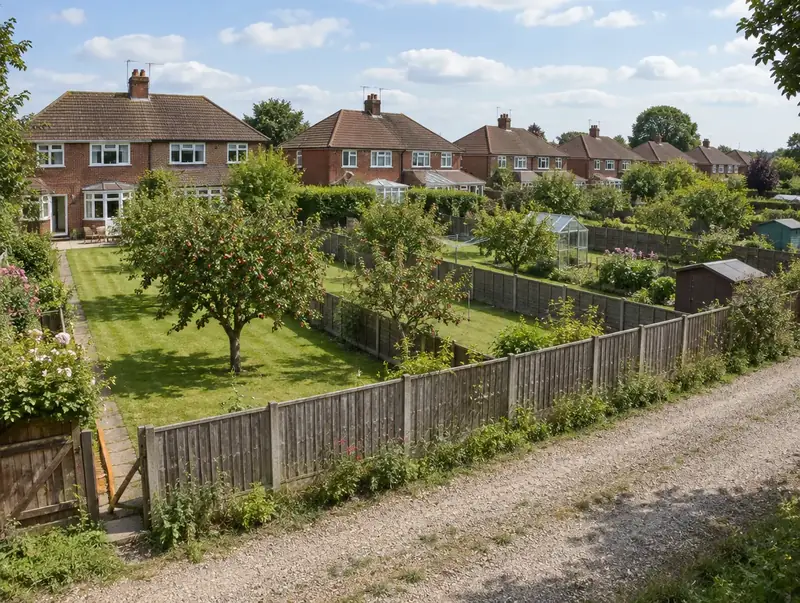
If you have a long garden, or land behind your house with access to a lane or road, it may be a backland plot. We assess access, neighbours and the council's policy on garden land before suggesting a way forward.
- Size
- 1 to 20 homes typically
- Planning
- Usually without
- Areas
- England & Wales
- Ways we buy
- Conditional or outright
What garden and backland plots we want near Bristol
Bristol is a compact city bounded by the Avon Gorge, the Severn estuary at Avonmouth and the Bristol and Bath Green Belt, which covers land on and beyond its edges. Most new homes come from previously developed land: former industrial and commercial sites, yards, garage courts and regeneration areas such as Temple Quarter and the harbourside. Small infill and backland plots across the suburbs are also a steady source of sites.
- Long rear gardens backing onto a lane, road or track
- Land behind houses with an existing drive or gap for access
- Paddocks and orchards behind homes on the edge of a village
- Plots where the owner wants to keep their house
Higher densities are encouraged around stations and the city centre, with Temple Meads and the MetroWest rail upgrades a focus for growth. Flood risk from the tidal Avon and the Severn estuary affects central and Avonmouth sites, and conservation areas cover much of the historic city.
Checks we make on garden and backland plots in Bristol
Access width
The drive or road into the plot must be safe for cars, bins and emergency vehicles.
Overlooking
New homes must sit far enough from existing homes to protect privacy.
Mortgage consent
If your home is mortgaged, the lender will usually need to release the garden land.
In England, the revised National Planning Policy Framework published on 17 August 2026 replaced the old "tilted balance" with new settlement policies: development within a settlement should normally be approved unless the harm substantially outweighs the benefits, while land outside a settlement can gain support in defined circumstances.
The August 2026 NPPF supports homes within reasonable walking distance (around 800 metres) of well-connected railway stations, with minimum densities of 35 homes per hectare, or 45 near higher-frequency stations.
Ways to sell garden and backland plots in Bristol
Subject-to-planning contract
The usual route: we apply and you only sell if permission is granted.
Subject-to-planning contractFrom first call to completion
Send the basics
A postcode or plan and a few lines about the land are enough to start.
We do the homework
We check planning history, policy, flood maps and access at no cost to you.
We explain the options
You get a written proposal covering price, structure and timing.
Agree and proceed
Once you are happy, solicitors are instructed and the deal moves forward.
Frequently asked in Bristol
Will selling part of my garden affect my house value?
It can, and the effect varies. We plan the boundary and access to protect your home, and you should take independent advice on the overall position.
My neighbours might sell too. Does that help?
Often, yes. Combining gardens can create a better site and access. We can talk to each owner and keep the arrangement fair.
How quickly can you look at a site in Bristol?
For most sites we can give an initial view once we have the location and a plan. Detailed checks follow if the land looks suitable.
Which planning rules apply to land in Bristol?
As Bristol is in England, national policy comes from the National Planning Policy Framework, revised in August 2026. Local policies in the council's development plan also apply.