
Commercial and industrial sites wanted in Blyth
We want to hear from owners of commercial and industrial sites in Blyth. There is nothing to pay us, and you are under no obligation.
If you own industrial units, a business yard or commercial land that is surrounded by housing or underused, it may be worth more as a residential site. We look at employment land policy, tenancies and ground conditions before making an offer.
- Size
- Any
- Planning
- With or without
- Areas
- England & Wales
- Ways we buy
- Outright or conditional
What commercial and industrial sites we want near Blyth
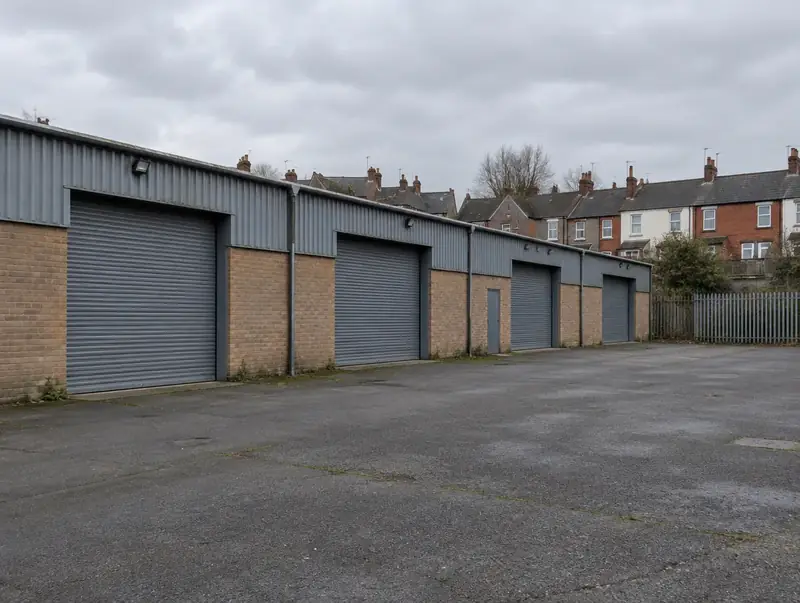
We look at yards and units across Blyth where the business use has run its course or the site sits awkwardly among houses. Blyth is in Northumberland, about 8 miles east of Morpeth. Nearby places include Bedlington, Ashington and Cramlington.
- Industrial units and yards within residential areas
- Sites with tenants on short leases or approaching breaks
- Builders' yards, depots and storage land
- Garage, workshop and showroom sites
Northumberland's population is concentrated in the south-east, around Blyth, Cramlington, Ashington, Bedlington and Morpeth, with market towns such as Hexham and Berwick-upon-Tweed and many remote villages. Green Belt extends from the Tyne and Wear edge across the south-east, and Northumberland National Park and the Northumberland Coast and North Pennines National Landscapes cover much of the rest. Former colliery land, edge-of-town fields and farm buildings are common sources of housing land.
What usually makes or breaks it
Employment land protection
Councils often protect business land; evidence of marketing or lack of demand can matter.
Leases
Tenancies and their protection affect when the site can be redeveloped.
Permitted development (England)
Some changes from commercial to residential use can be made through prior approval rather than a full application.
National policy in England now recognises "medium development" of 10 to 49 homes on sites up to 2.5 hectares, and asks councils to allocate at least 10% of their housing on sites of one hectare or less and a further 10% on sites of one to 2.5 hectares.
Though we are based in Birmingham (roughly 179 miles away), distance is no barrier: we look at land across England and Wales.
Ways to sell commercial and industrial sites in Blyth
Outright purchase
Common, with leases and remediation reflected in timing and price.
Outright purchaseSubject-to-planning contract
Used where a change of use still needs consent.
Subject-to-planning contractOption agreement
You grant us the right to buy within a set period, usually for an option premium, while we pursue planning.
Option agreementJoint venture
You contribute the land, we fund and manage planning and delivery, and the proceeds are shared as agreed.
Joint ventureThe next steps
Send the basics
A postcode or plan and a few lines about the land are enough to start.
We do the homework
We check planning history, policy, flood maps and access at no cost to you.
We explain the options
You get a written proposal covering price, structure and timing.
Agree and proceed
Once you are happy, solicitors are instructed and the deal moves forward.
Commercial and industrial sites in Blyth: common questions
Will the council object to losing business land?
Some councils protect employment land. Evidence that the site is no longer needed or suitable for business can help.
Do I need to market the site first?
Not to sell to us. Marketing evidence can, however, support a planning case for change of use.
Can an agent introduce land in Blyth to you?
Yes. Estate agents, land agents and planning consultants can introduce sites with the owner's consent. Any fee is agreed in writing before details are shared, confirmed by the owner in writing and paid only on completion.
Which planning rules apply to land in Blyth?
As Blyth is in England, national policy comes from the National Planning Policy Framework, revised in August 2026. Local policies in the council's development plan also apply.