
Barns and rural buildings wanted in Blyth
If you own barns and rural buildings in or around Blyth, we would like to hear about it. We buy directly and give a free, no-obligation appraisal.
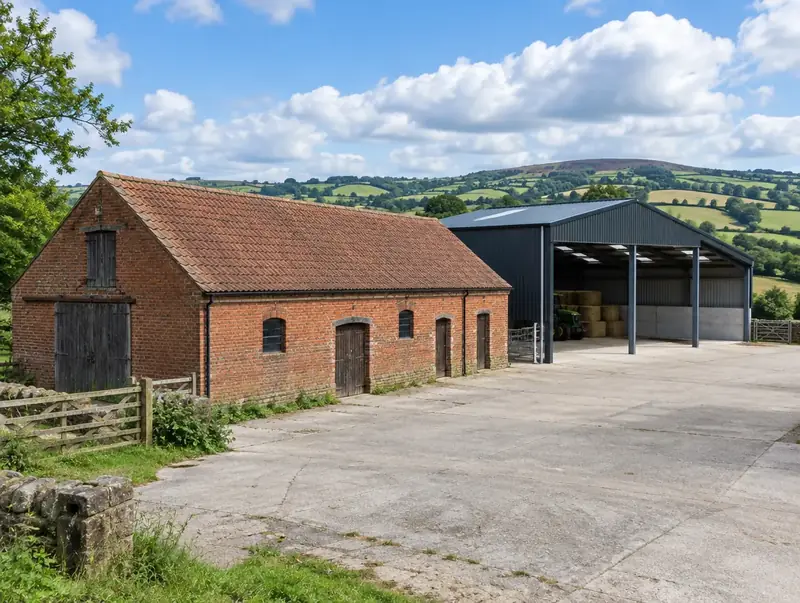
Barns and rural buildings can sometimes become homes through conversion or, in some cases, replacement. In England, Class Q permitted development allows certain agricultural buildings to change to residential use; in Wales the route is through a planning application. We buy suitable buildings in both nations.
- Size
- Single barns to farmyards
- Planning
- With or without
- Areas
- England & Wales
- Ways we buy
- Outright or conditional
Barns and rural buildings we are looking for in Blyth
We look at barns and rural yards around Blyth and give a straight view on whether conversion or replacement is realistic. In Northumberland, Blyth sits about 8 miles east of Morpeth; Bedlington and Ashington are its nearest neighbours on our list.
- Traditional brick or stone barns
- Stable blocks, workshops and rural yards
- Farmyards with several buildings
- Buildings with or without an existing consent
Northumberland's population is concentrated in the south-east, around Blyth, Cramlington, Ashington, Bedlington and Morpeth, with market towns such as Hexham and Berwick-upon-Tweed and many remote villages. Green Belt extends from the Tyne and Wear edge across the south-east, and Northumberland National Park and the Northumberland Coast and North Pennines National Landscapes cover much of the rest. Former colliery land, edge-of-town fields and farm buildings are common sources of housing land.
Checks we make on barns and rural buildings in Blyth
Planning route
In England, Class Q prior approval may apply to agricultural buildings; in Wales, a full application is usually needed.
Protected species
Bats and barn owls are common in rural buildings and need surveys at the right time of year.
Protected landscapes
National Parks and National Landscapes can restrict permitted development and design.
In England, the revised National Planning Policy Framework published on 17 August 2026 replaced the old "tilted balance" with new settlement policies: development within a settlement should normally be approved unless the harm substantially outweighs the benefits, while land outside a settlement can gain support in defined circumstances.
We are based in Great Barr, Birmingham, around 179 miles from Blyth, and we travel to see sites across England and Wales.
How we could buy your land in Blyth
Subject-to-planning contract
Common: we seek consent or prior approval and complete if successful.
Subject-to-planning contractOption agreement
You grant us the right to buy within a set period, usually for an option premium, while we pursue planning.
Option agreementHow a sale to us works
Get in touch
Tell us where the land is and what you know about it.
Site review
We look at the land, its planning position and anything that could affect it.
Proposal
We put our proposal in writing, with no obligation to accept.
Exchange and completion
If you go ahead, contracts are exchanged and the sale completes on the agreed terms.
Questions owners in Blyth ask
Does Class Q apply in Wales?
No. Class Q is part of the permitted development rules for England. In Wales, barn conversions generally need a full planning application.
Do bats stop a barn conversion?
Not usually, but surveys and mitigation are needed, and survey seasons can affect timing.
Is Blyth too far from our Birmingham base?
No. We are based in Great Barr, Birmingham, about 179 miles from Blyth, and we look at land right across England and Wales.
Can an agent introduce land in Blyth to you?
Yes. Estate agents, land agents and planning consultants can introduce sites with the owner's consent. Any fee is agreed in writing before details are shared, confirmed by the owner in writing and paid only on completion.