
Commercial and industrial sites wanted in Dorset
We want to hear from owners of commercial and industrial sites in Dorset. There is nothing to pay us, and you are under no obligation.
Commercial and industrial sites can sometimes be redeveloped for housing, particularly when they sit among homes or are no longer needed for business. We assess whether a change to residential is realistic and buy suitable sites across England and Wales.
- Size
- Any
- Planning
- With or without
- Areas
- England & Wales
- Ways we buy
- Outright or conditional
The commercial and industrial sites that interests us around Dorset
Dorset combines the Bournemouth, Christchurch and Poole conurbation with market towns such as Dorchester, Wimborne Minster and Ferndown and a large rural area. Green Belt surrounds the conurbation and extends inland, and the Dorset and Cranborne Chase National Landscapes cover much of the countryside. Typical sites include urban brownfield land, edge-of-town fields, farm buildings and infill plots in villages.
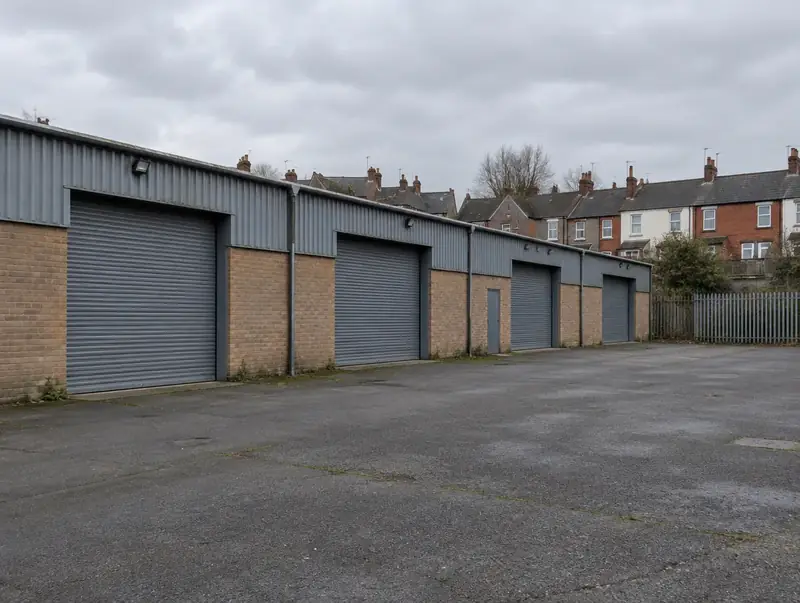
- Industrial units and yards within residential areas
- Commercial land that is vacant or underused
- Builders' yards, depots and storage land
- Land where employment use has been marketed without success
Heathland protection around the conurbation means many schemes contribute to mitigation for protected heaths, and Poole Harbour has been subject to nutrient neutrality advice. Weymouth, the wider coast and the river valleys add flood and coastal-change checks, while the A31 and A35 corridors link the main towns.
Checks we make on commercial and industrial sites in Dorset
Leases
Tenancies and their protection affect when the site can be redeveloped.
Neighbouring businesses
Homes next to noisy uses may need mitigation or may not be acceptable.
Permitted development (England)
Some changes from commercial to residential use can be made through prior approval rather than a full application.
In England, a planning permission normally has to be implemented within three years unless the council sets a different period, and councils aim to decide minor applications within eight weeks and major ones within thirteen.
English councils keep brownfield land registers, and some previously developed sites can be granted permission in principle, a quicker way of establishing whether housing is acceptable before technical details are settled.
Parts of Dorset are Green Belt, though not every town has any nearby. We check early whether a site is inside it and, if so, whether a grey belt or previously developed land case could apply.
Commercial and industrial sites wanted in towns across Dorset
Choosing how to sell
Outright purchase
Common, with leases and remediation reflected in timing and price.
Outright purchaseSubject-to-planning contract
We agree a price now and complete once a satisfactory planning permission is granted.
Subject-to-planning contractOption agreement
You grant us the right to buy within a set period, usually for an option premium, while we pursue planning.
Option agreementWhat happens after you get in touch
Get in touch
Tell us where the land is and what you know about it.
Site review
We look at the land, its planning position and anything that could affect it.
Proposal
We put our proposal in writing, with no obligation to accept.
Exchange and completion
If you go ahead, contracts are exchanged and the sale completes on the agreed terms.
Commercial and industrial sites in Dorset: common questions
Will the council object to losing business land?
Some councils protect employment land. Evidence that the site is no longer needed or suitable for business can help.
Is permitted development an option?
In England, some commercial-to-residential changes can use prior approval. Whether it applies depends on the use, the building and local restrictions.
How quickly can you look at a site in Dorset?
For most sites we can give an initial view once we have the location and a plan. Detailed checks follow if the land looks suitable.
Which planning rules apply to land in Dorset?
As Dorset is in England, national policy comes from the National Planning Policy Framework, revised in August 2026. Local policies in the council's development plan also apply.