
Barns and rural buildings wanted in Newton Aycliffe
We want to hear from owners of barns and rural buildings in Newton Aycliffe. There is nothing to pay us, and you are under no obligation.
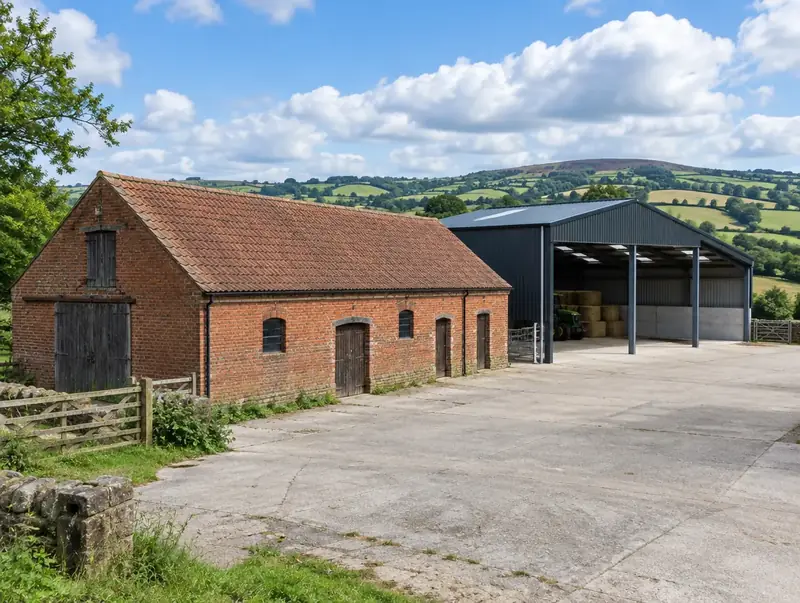
A redundant barn, stable block or yard can have residential potential. Traditional buildings often suit conversion, while modern steel barns may qualify for permitted development in England. We assess the building, access and planning route before proposing a deal.
- Size
- Single barns to farmyards
- Planning
- With or without
- Areas
- England & Wales
- Ways we buy
- Outright or conditional
Is your land in Newton Aycliffe the kind we want?
We look at barns and rural yards around Newton Aycliffe and give a straight view on whether conversion or replacement is realistic. Sitting about 11 miles south of Durham, Newton Aycliffe is within County Durham, with Bishop Auckland and Spennymoor close by.
- Modern agricultural buildings that may suit Class Q (England)
- Stable blocks, workshops and rural yards
- Buildings with an existing access to a road
- Buildings with or without an existing consent
County Durham here includes the Tees Valley towns of Darlington, Stockton-on-Tees and Hartlepool as well as Durham, Chester-le-Street, Consett, Bishop Auckland and the former coalfield villages. Green Belt protects land around Durham and between the Tyne and Wear conurbation and nearby towns, while the North Pennines National Landscape covers the west. Former colliery land, edge-of-village fields and older industrial sites are common sources of housing land.
Checks we make on barns and rural buildings in Newton Aycliffe
Planning route
In England, Class Q prior approval may apply to agricultural buildings; in Wales, a full application is usually needed.
Protected species
Bats and barn owls are common in rural buildings and need surveys at the right time of year.
Access and services
Rural buildings often need new access, drainage and power.
In England, the revised National Planning Policy Framework published on 17 August 2026 replaced the old "tilted balance" with new settlement policies: development within a settlement should normally be approved unless the harm substantially outweighs the benefits, while land outside a settlement can gain support in defined circumstances.
Though we are based in Birmingham (roughly 144 miles away), distance is no barrier: we look at land across England and Wales.
How we could buy your land in Newton Aycliffe
Subject-to-planning contract
Common: we seek consent or prior approval and complete if successful.
Subject-to-planning contractOption agreement
You grant us the right to buy within a set period, usually for an option premium, while we pursue planning.
Option agreementJoint venture
You contribute the land, we fund and manage planning and delivery, and the proceeds are shared as agreed.
Joint ventureFrom first call to completion
Get in touch
Tell us where the land is and what you know about it.
Site review
We look at the land, its planning position and anything that could affect it.
Proposal
We put our proposal in writing, with no obligation to accept.
Exchange and completion
If you go ahead, contracts are exchanged and the sale completes on the agreed terms.
Frequently asked in County Durham
Does Class Q apply in Wales?
No. Class Q is part of the permitted development rules for England. In Wales, barn conversions generally need a full planning application.
Do bats stop a barn conversion?
Not usually, but surveys and mitigation are needed, and survey seasons can affect timing.
Do you buy barns and rural buildings in Newton Aycliffe?
Yes. We buy barns and rural buildings in Newton Aycliffe and throughout County Durham, as well as elsewhere in England and Wales. Tell us where the land is and we will give you a free appraisal.
How quickly can you look at a site in Newton Aycliffe?
For most sites we can give an initial view once we have the location and a plan. Detailed checks follow if the land looks suitable.