
Barns and rural buildings wanted in Stockton-on-Tees
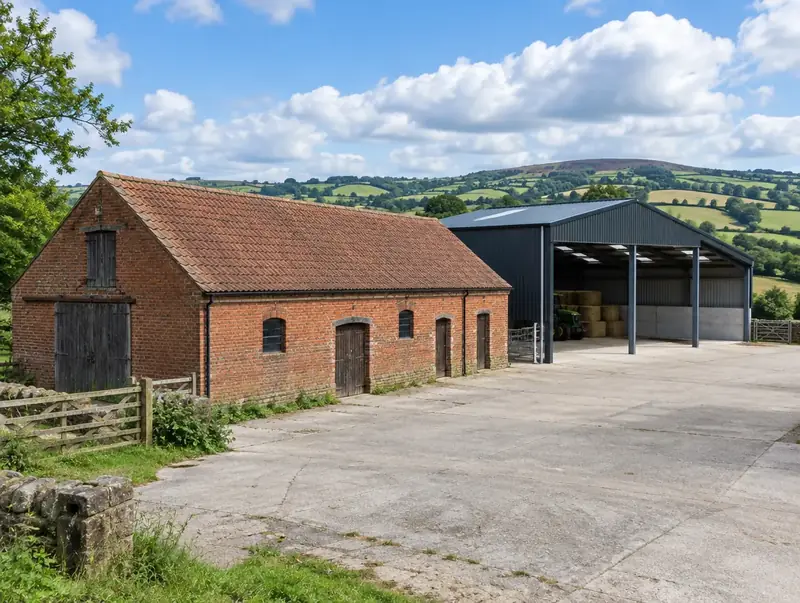
If you own barns and rural buildings in or around Stockton-on-Tees, we would like to hear about it. We buy directly and give a free, no-obligation appraisal.
Barns and rural buildings can sometimes become homes through conversion or, in some cases, replacement. In England, Class Q permitted development allows certain agricultural buildings to change to residential use; in Wales the route is through a planning application. We buy suitable buildings in both nations.
- Size
- Single barns to farmyards
- Planning
- With or without
- Areas
- England & Wales
- Ways we buy
- Outright or conditional
The barns and rural buildings that interests us around Stockton-on-Tees
We look at barns and rural yards around Stockton-on-Tees and give a straight view on whether conversion or replacement is realistic. Sitting about 18 miles south-east of Durham, Stockton-on-Tees is within County Durham, with Billingham and Thornaby-on-Tees close by.
- Traditional brick or stone barns
- Stable blocks, workshops and rural yards
- Farmyards with several buildings
- Buildings with an existing access to a road
County Durham here includes the Tees Valley towns of Darlington, Stockton-on-Tees and Hartlepool as well as Durham, Chester-le-Street, Consett, Bishop Auckland and the former coalfield villages. Green Belt protects land around Durham and between the Tyne and Wear conurbation and nearby towns, while the North Pennines National Landscape covers the west. Former colliery land, edge-of-village fields and older industrial sites are common sources of housing land.
Before we make an offer in Stockton-on-Tees
Planning route
In England, Class Q prior approval may apply to agricultural buildings; in Wales, a full application is usually needed.
Protected landscapes
National Parks and National Landscapes can restrict permitted development and design.
Access and services
Rural buildings often need new access, drainage and power.
The August 2026 NPPF supports homes within reasonable walking distance (around 800 metres) of well-connected railway stations, with minimum densities of 35 homes per hectare, or 45 near higher-frequency stations.
We are based in Great Barr, Birmingham, around 142 miles from Stockton-on-Tees, and we travel to see sites across England and Wales.
Ways to sell barns and rural buildings in Stockton-on-Tees
Outright purchase
We agree a price and buy the land, with no planning condition attached.
Outright purchaseSubject-to-planning contract
Common: we seek consent or prior approval and complete if successful.
Subject-to-planning contractThe next steps
Tell us about the land
Use the form or call us with the location and a rough outline of the site.
Free appraisal
We review title, planning and constraints and tell you honestly what we think.
Written offer
If the site suits us, we set out an offer and the way we propose to buy.
Solicitors take over
Your solicitor and ours agree the contract; we keep you informed throughout.
Questions owners in Stockton-on-Tees ask
Does Class Q apply in Wales?
No. Class Q is part of the permitted development rules for England. In Wales, barn conversions generally need a full planning application.
Can a steel-framed barn become a home?
In England it may, under Class Q, if it meets the conditions. Whether it is worth doing depends on the building, access and location.
Can an agent introduce land in Stockton-on-Tees to you?
Yes. Estate agents, land agents and planning consultants can introduce sites with the owner's consent. Any fee is agreed in writing before details are shared, confirmed by the owner in writing and paid only on completion.
Do I need to pay anything to have land in Stockton-on-Tees assessed?
No. Our appraisal is free and there is no obligation to sell to us.