
Barns and rural buildings wanted in Dorchester
If you own barns and rural buildings in or around Dorchester, we would like to hear about it. We buy directly and give a free, no-obligation appraisal.
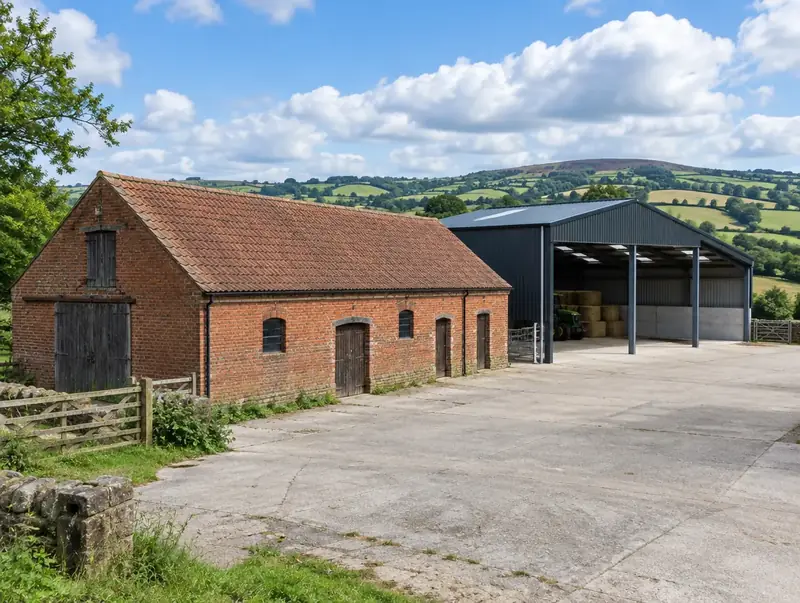
Barns and rural buildings can sometimes become homes through conversion or, in some cases, replacement. In England, Class Q permitted development allows certain agricultural buildings to change to residential use; in Wales the route is through a planning application. We buy suitable buildings in both nations.
- Size
- Single barns to farmyards
- Planning
- With or without
- Areas
- England & Wales
- Ways we buy
- Outright or conditional
The barns and rural buildings that interests us around Dorchester
We look at barns and rural yards around Dorchester and give a straight view on whether conversion or replacement is realistic. As the county town of Dorset, Dorchester anchors the area we cover here, along with Weymouth, Yeovil and Poole.
- Modern agricultural buildings that may suit Class Q (England)
- Stable blocks, workshops and rural yards
- Farmyards with several buildings
- Buildings with an existing access to a road
Heathland protection around the conurbation means many schemes contribute to mitigation for protected heaths, and Poole Harbour has been subject to nutrient neutrality advice. Weymouth, the wider coast and the river valleys add flood and coastal-change checks, while the A31 and A35 corridors link the main towns.
What usually makes or breaks it
Structure
Conversion routes usually require the building to be capable of conversion without substantial rebuilding.
Protected landscapes
National Parks and National Landscapes can restrict permitted development and design.
Access and services
Rural buildings often need new access, drainage and power.
National policy in England now recognises "medium development" of 10 to 49 homes on sites up to 2.5 hectares, and asks councils to allocate at least 10% of their housing on sites of one hectare or less and a further 10% on sites of one to 2.5 hectares.
Parts of Dorset are Green Belt, though not every town has any nearby. We check early whether a site is inside it and, if so, whether a grey belt or previously developed land case could apply.
Though we are based in Birmingham (roughly 129 miles away), distance is no barrier: we look at land across England and Wales.
Choosing how to sell
Subject-to-planning contract
We agree a price now and complete once a satisfactory planning permission is granted.
Subject-to-planning contractFrom first call to completion
Send the basics
A postcode or plan and a few lines about the land are enough to start.
We do the homework
We check planning history, policy, flood maps and access at no cost to you.
We explain the options
You get a written proposal covering price, structure and timing.
Agree and proceed
Once you are happy, solicitors are instructed and the deal moves forward.
Your questions answered
We still use some of the buildings. Can we sell just part of the yard?
Yes. We can look at selling some buildings and keeping others, with access and boundaries agreed.
Do bats stop a barn conversion?
Not usually, but surveys and mitigation are needed, and survey seasons can affect timing.
How quickly can you look at a site in Dorchester?
For most sites we can give an initial view once we have the location and a plan. Detailed checks follow if the land looks suitable.
Which planning rules apply to land in Dorchester?
As Dorchester is in England, national policy comes from the National Planning Policy Framework, revised in August 2026. Local policies in the council's development plan also apply.