
Barns and rural buildings wanted in Flint
If you own barns and rural buildings in or around Flint, we would like to hear about it. We buy directly and give a free, no-obligation appraisal.
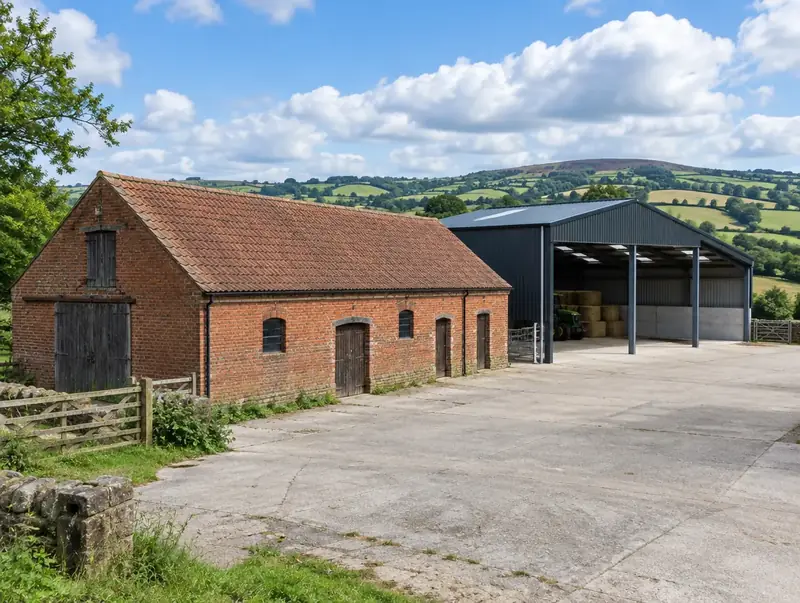
If you have farm buildings that are no longer needed, they may be suited to homes. We look at traditional and modern barns, stables and rural yards across England and Wales and explain the realistic planning route for each.
- Size
- Single barns to farmyards
- Planning
- With or without
- Areas
- England & Wales
- Ways we buy
- Outright or conditional
The barns and rural buildings that interests us around Flint
In the countryside around Flint, redundant barns and yards can sometimes become homes, depending on the building and the route available. Sitting about 5 miles north of Mold, Flint is within Clwyd, with Holywell and Mold close by.
- Stable blocks, workshops and rural yards
- Farmyards with several buildings
- Buildings with an existing access to a road
- Buildings with or without an existing consent
Clwyd covers north-east Wales, from Wrexham, Deeside, Buckley, Mold and Flint to the coastal towns of Rhyl, Prestatyn, Colwyn Bay and Llandudno and the market towns of the Vale of Clwyd. Typical sites include edge-of-town fields, former industrial land around Deeside and Wrexham, farm buildings and village infill. There is no grey belt in Wales, but Future Wales anticipates a green belt around Wrexham and Deeside, and the Clwydian Range and Dee Valley National Landscape is a major constraint.
What usually makes or breaks it
Structure
Conversion routes usually require the building to be capable of conversion without substantial rebuilding.
Protected landscapes
National Parks and National Landscapes can restrict permitted development and design.
Access and services
Rural buildings often need new access, drainage and power.
Flood risk in Wales is assessed under Technical Advice Note 15 and the Flood Map for Planning, which can be decisive for land near rivers and the coast.
We are based in Great Barr, Birmingham, around 70 miles from Flint, and we travel to see sites across England and Wales.
Choosing how to sell
Outright purchase
We agree a price and buy the land, with no planning condition attached.
Outright purchaseSubject-to-planning contract
Common: we seek planning consent and complete if successful.
Subject-to-planning contractJoint venture
You contribute the land, we fund and manage planning and delivery, and the proceeds are shared as agreed.
Joint ventureFrom first call to completion
Send the basics
A postcode or plan and a few lines about the land are enough to start.
We do the homework
We check planning history, policy, flood maps and access at no cost to you.
We explain the options
You get a written proposal covering price, structure and timing.
Agree and proceed
Once you are happy, solicitors are instructed and the deal moves forward.
Your questions answered
Does Class Q apply in Wales?
No. Class Q is part of the permitted development rules for England. In Wales, barn conversions generally need a full planning application.
Do bats stop a barn conversion?
Not usually, but surveys and mitigation are needed, and survey seasons can affect timing.
Which planning rules apply to land in Flint?
As Flint is in Wales, national policy comes from Planning Policy Wales and Future Wales: the National Plan 2040. Local policies in the council's development plan also apply.
Do I need to pay anything to have land in Flint assessed?
No. Our appraisal is free and there is no obligation to sell to us.