
Barns and rural buildings wanted in Tynemouth
If you own barns and rural buildings in or around Tynemouth, we would like to hear about it. We buy directly and give a free, no-obligation appraisal.
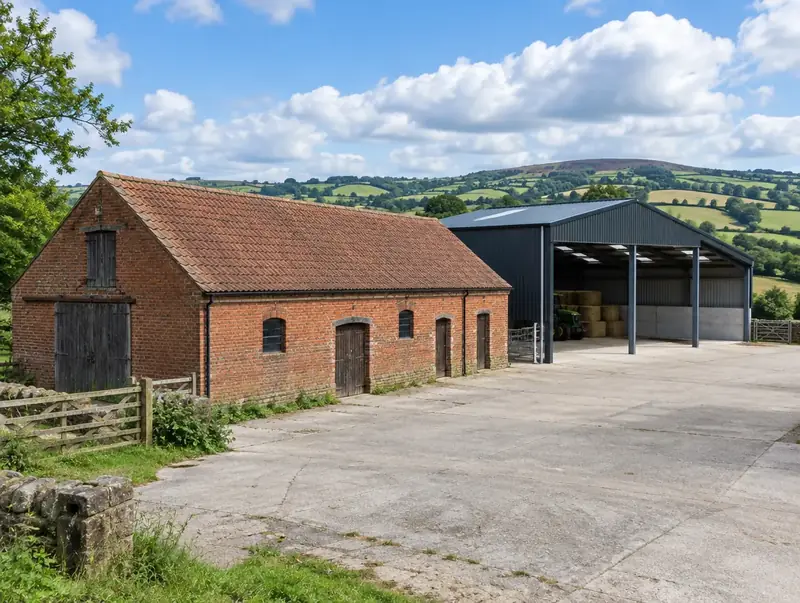
Barns and rural buildings can sometimes become homes through conversion or, in some cases, replacement. In England, Class Q permitted development allows certain agricultural buildings to change to residential use; in Wales the route is through a planning application. We buy suitable buildings in both nations.
- Size
- Single barns to farmyards
- Planning
- With or without
- Areas
- England & Wales
- Ways we buy
- Outright or conditional
What barns and rural buildings we want near Tynemouth
In the countryside around Tynemouth, redundant barns and yards can sometimes become homes, depending on the building and the route available. In Tyne and Wear, Tynemouth sits about 8 miles north-east of Newcastle upon Tyne; North Shields and South Shields are its nearest neighbours on our list.
- Traditional brick or stone barns
- Modern agricultural buildings that may suit Class Q (England)
- Stable blocks, workshops and rural yards
- Farmyards with several buildings
The Tyne and Wear Metro and the East Coast Main Line are a focus for higher-density homes, and riverside regeneration continues along the Tyne and the Wear. The coast is internationally protected for birds, so schemes near the shore often contribute to recreation mitigation, and coal mining legacy checks are common inland.
Checks we make on barns and rural buildings in Tynemouth
Protected species
Bats and barn owls are common in rural buildings and need surveys at the right time of year.
Protected landscapes
National Parks and National Landscapes can restrict permitted development and design.
Access and services
Rural buildings often need new access, drainage and power.
National policy in England now recognises "medium development" of 10 to 49 homes on sites up to 2.5 hectares, and asks councils to allocate at least 10% of their housing on sites of one hectare or less and a further 10% on sites of one to 2.5 hectares.
Though we are based in Birmingham (roughly 172 miles away), distance is no barrier: we look at land across England and Wales.
Four ways to sell to us
Outright purchase
We agree a price and buy the land, with no planning condition attached.
Outright purchaseSubject-to-planning contract
We agree a price now and complete once a satisfactory planning permission is granted.
Subject-to-planning contractOption agreement
You grant us the right to buy within a set period, usually for an option premium, while we pursue planning.
Option agreementThe next steps
Tell us about the land
Use the form or call us with the location and a rough outline of the site.
Free appraisal
We review title, planning and constraints and tell you honestly what we think.
Written offer
If the site suits us, we set out an offer and the way we propose to buy.
Solicitors take over
Your solicitor and ours agree the contract; we keep you informed throughout.
Questions owners in Tynemouth ask
Does Class Q apply in Wales?
No. Class Q is part of the permitted development rules for England. In Wales, barn conversions generally need a full planning application.
Can a steel-framed barn become a home?
In England it may, under Class Q, if it meets the conditions. Whether it is worth doing depends on the building, access and location.
Can an agent introduce land in Tynemouth to you?
Yes. Estate agents, land agents and planning consultants can introduce sites with the owner's consent. Any fee is agreed in writing before details are shared, confirmed by the owner in writing and paid only on completion.
How quickly can you look at a site in Tynemouth?
For most sites we can give an initial view once we have the location and a plan. Detailed checks follow if the land looks suitable.